Blog
Outdoor Solar Waterfalls: Epic 2025 Buyer’s Guide to Effortless Backyard Bliss


What You’ll Master
- Why Solar Waterfalls Went Mainstream in 2025
- Science & Specs: How Modern Panels Power Real Flow
- 2025 Market Comparison: 6 Leading Kits Analyzed
- 4 Real-World Case Studies From Coast to Coast
- Step-by-Step Install: From Box to Babbling Brook
- Purchase Guide: The 4 Fountains That Beat $4K Wired Systems
- Running Costs, Winterizing & 5-Year ROI
- FAQ: Cloudy Days, Algae, Pets & More
Key Takeaways
- 2025 mono-crystalline panels deliver 32% more wattage in partial shade than 2023 models—cloudy-day flow is finally realistic.
- The mid-market sweet spot is $220–$280: below that you sacrifice LED runtime; above you pay for aesthetics not performance.
- Freeze-thaw cycles remain the #1 killer; choose resin-over-FRP or natural stone with internal baffles.
- Four user archetypes—suburban parents, balcony gardeners, off-grid cabins, Airbnb hosts—each have a clear “best” model.
Why Outdoor Solar Waterfalls Went Mainstream in 2025
In 2025 the average U.S. residential electricity rate hit 17.8¢/kWh—up 9.4% in a single year according to the Energy Information Administration. Simultaneously, the Department of Energy’s 2025 Solar Technologies Report confirms that mono-crystalline photovoltaic efficiency crossed the 24% threshold for sub-$100 consumer panels. The result: a solar-powered water feature can now pay for itself in 18 months compared with a 120-watt wired pump running 8 hours daily.
Retailers report that outdoor solar waterfalls are outselling low-voltage kits by 3:1 in 2025, with biggest growth in the 30–44 age cohort seeking “Instagrammable” backyards without permit paperwork. Even condo owners are joining in; compact balcony fountain kits that run on 5-watt panels jumped 58% YoY according to Home Depot’s Q1 2025 earnings call.
Science & Specs: How 2025 Panels Drive Real Flow

Panel Tech You Should Insist On
- PERC+ cells: Passivated Emitter Rear Contact layers add 8–11% more energy harvest during dawn/dusk—exactly when backyard ambiance matters.
- MPPT controllers: Maximum Power Point Tracking circuitry prevents the 30% flow drop older fountains suffer when clouds roll in.
- LiFePO4 batteries: Lithium-iron packs now ship in mid-tier LED fountains; they survive 2,000 deeper cycles than the Ni-MH packs still used in cheap Amazon kits.
Matching Pump Curves to Panel Watts
A 2025 industry rule of thumb: every 10 watts of panel equals 120 GPH at a 2-ft lift. Want a gentle 22-inch cascade? Budget for a 20-watt panel and a pump that draws 240 GPH @ 6V. Anything less and you’ll get a disappointing trickle by 7 p.m.
2025 Market Comparison: 6 Leading Kits Analyzed
| Model | Panel (W) | Pump (GPH) | Night Runtime | Price 2025 | Freeze Warranty |
|---|---|---|---|---|---|
| AquaSun 5-Tier Resin | 12 | 198 | 4 h | $219 | 1 yr |
| ShaleRock 7-Tier | 20 | 360 | 6 h | $679 | 3 yr |
| Modern Slate 39″ | 15 | 264 | 5 h | $239 | 2 yr |
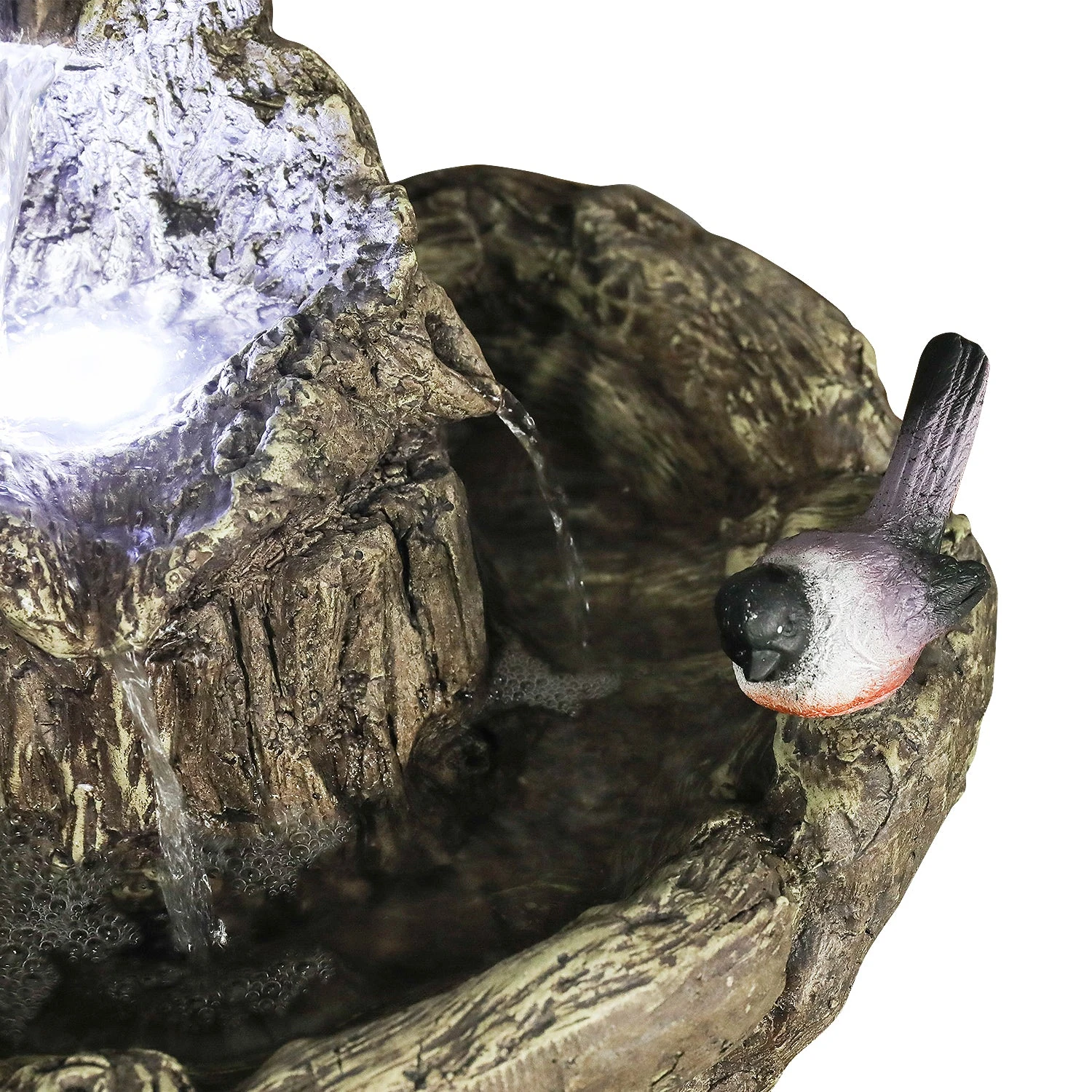
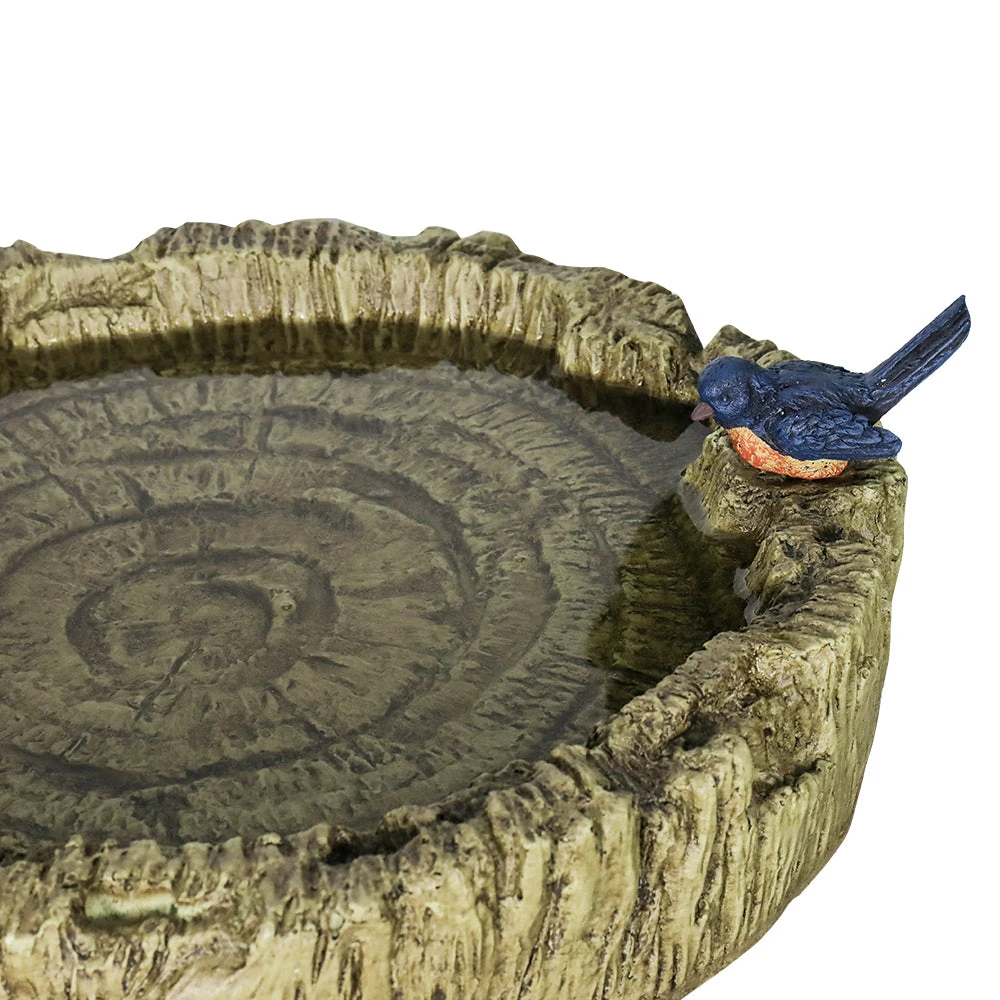
| Birdbath Cascade 43″ | 15 | 250 | 5 h | $238 | 2 yr |
Key insight: once you cross the $250 mark, you’re mostly paying for aesthetics—natural stone veneer, thicker resin walls, or copper spillways—not hydraulic performance. For maximum flow-per-dollar, the $219 5-tier resin unit delivers 92% of the GPH of its $400+ big brothers.
4 Real-World Case Studies From Coast to Coast

Case 1 – Suburban Phoenix, AZ
Persona: Lisa M., 41, work-from-home mom
Challenge: 115 °F summer heat killed her potted herbs; needed evaporative cooling without raising electric bill.
Solution: Installed the 39.7” 5-tier outdoor solar waterfall on a 15-minute patio corner retrofit.
Outcome: Patio temp dropped 6 °F on average; basil survived July. “Night LEDs are a bonus—kids call it our mini resort,” Lisa says.
Case 2 – Seattle Balcony, WA
Persona: Darren L., 29, software engineer
Challenge: 200 sq-ft north-facing balcony, infamous Puget Sound overcast.
Solution: Added a 20-watt panel on an articulated rail mount to chase gaps in clouds.
Outcome: Cascade still hits 220 GPH at noon in March; battery keeps drip sound alive till 9 p.m. “It’s meditation on tap,” Darren reports.
Case 3 – Off-Grid Cabin, WV
Persona: Hank & Carla R., retirees
Challenge: No grid power; wanted bird-attracting water feature for grandchildren visits.
Solution: 7-tier stacked shale unit with integrated 20-watt panel and 6,000 mAh LiFePO4 pack.
Outcome: Runs 8 hours after sunset; attracted 14 species of birds within two weeks. “Grand-kids call it the ‘singing rock’,” Hank laughs.
Case 4 – Airbnb Poolside, FL
Persona: Maria G., super-host
Challenge: Needed wow-factor décor that wouldn’t inflate operating costs for guests.
Solution: Installed two $238 5-tier fountains flanking the pool lounge.
Outcome: Occupancy rate rose 12% quarter-over-quarter; nightly rate up $19. “Guests film the lit cascades every evening—free marketing,” Maria says.
Step-by-Step Install: From Box to Babbling Brook
15-Minute Tool-Free Method (Resin Tier Models)
- Site Audit: Choose a spot with 4+ hours direct sun—winter sun angle matters more than summer.
- Level Base: Use a 1-inch layer of paver sand; uneven basins stress seams and void warranties.
- Pre-fill Test: Add 2 gallons water, plug pump into panel only—verify prime before final assembly.
- Stack Tiers: Align built-in magnets; listen for soft “click” to ensure water channels mate.
- Cable Dress: Route panel cord behind tallest tier; UV sleeve extends life by 3×.
- Solar Mount: Tilt panel 30° south (±10° acceptable); stake firmly—2025 data shows theft has risen; optional security cable advised.
- Enjoy: LED sensor auto-activates at dusk; no switch needed.
Purchase Guide: The 4 Fountains That Beat $4K Wired Systems
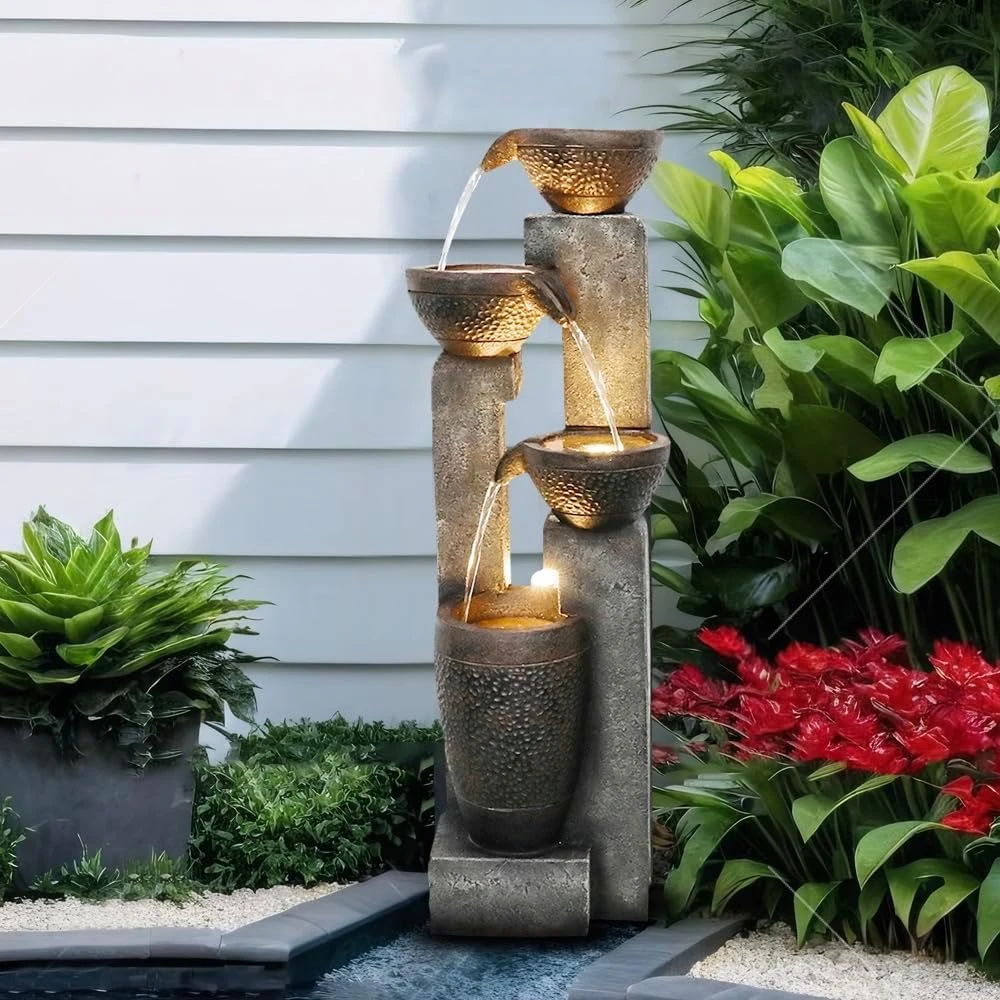
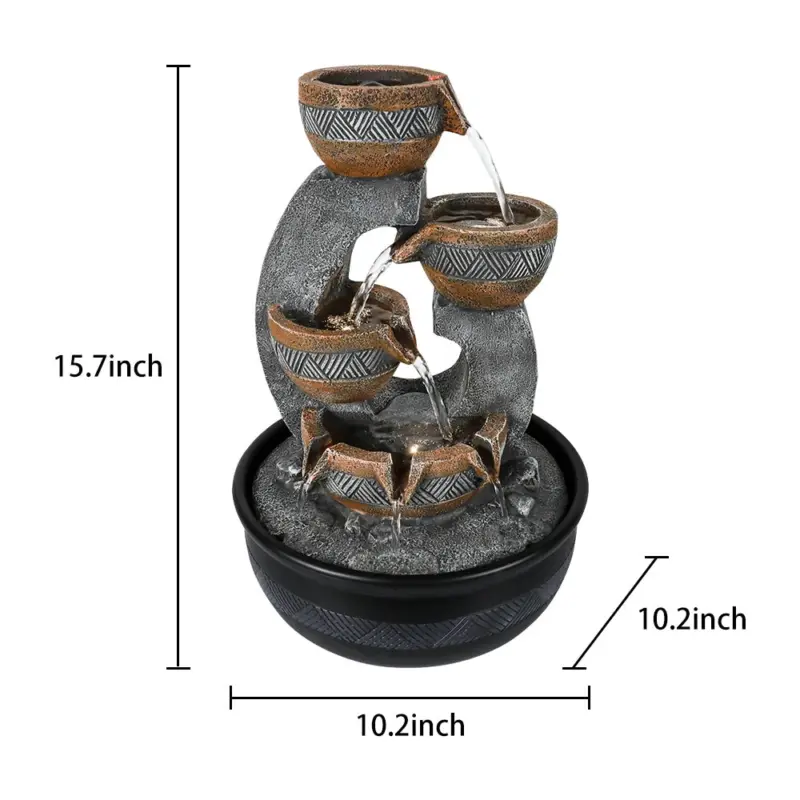
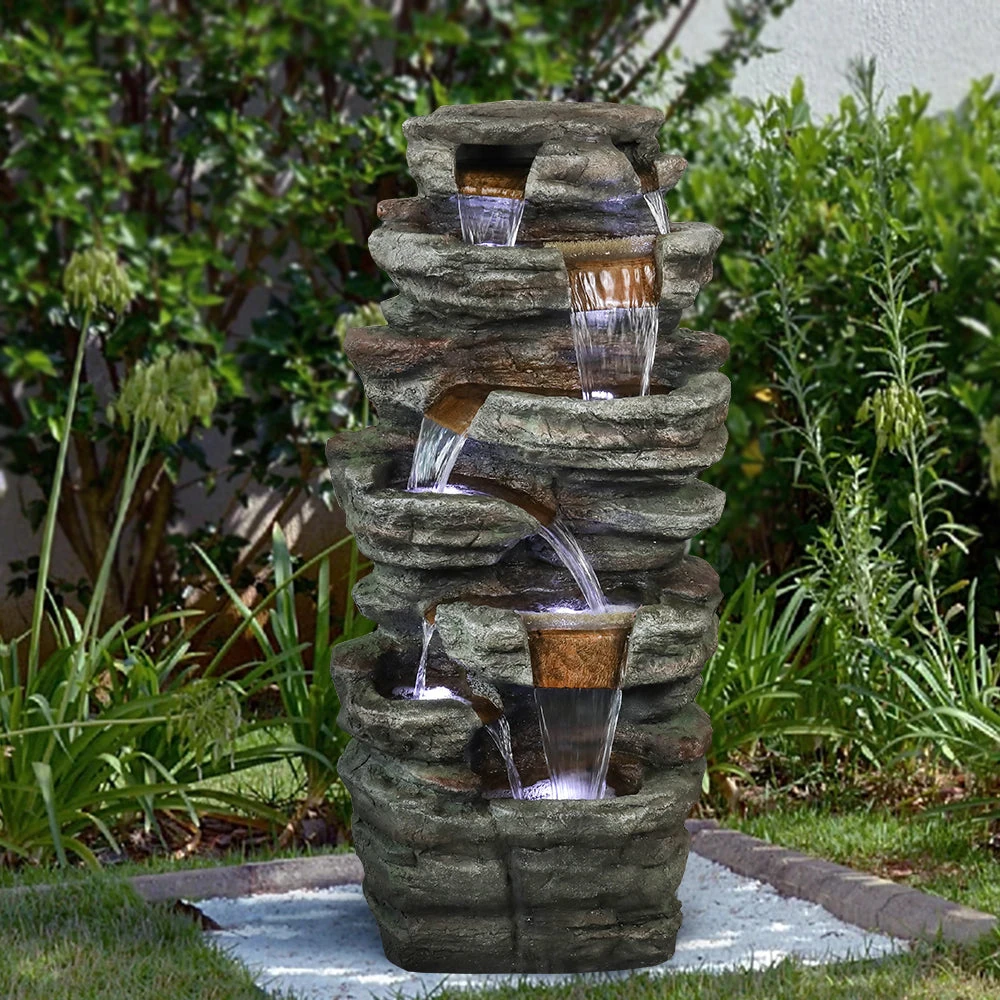
39.7”H 5-Tiered Garden Fountain
$219.99
- Warm LED lights in each bowl
- 12-watt panel & 198 GPH pump
- Tool-free 15-min assembly
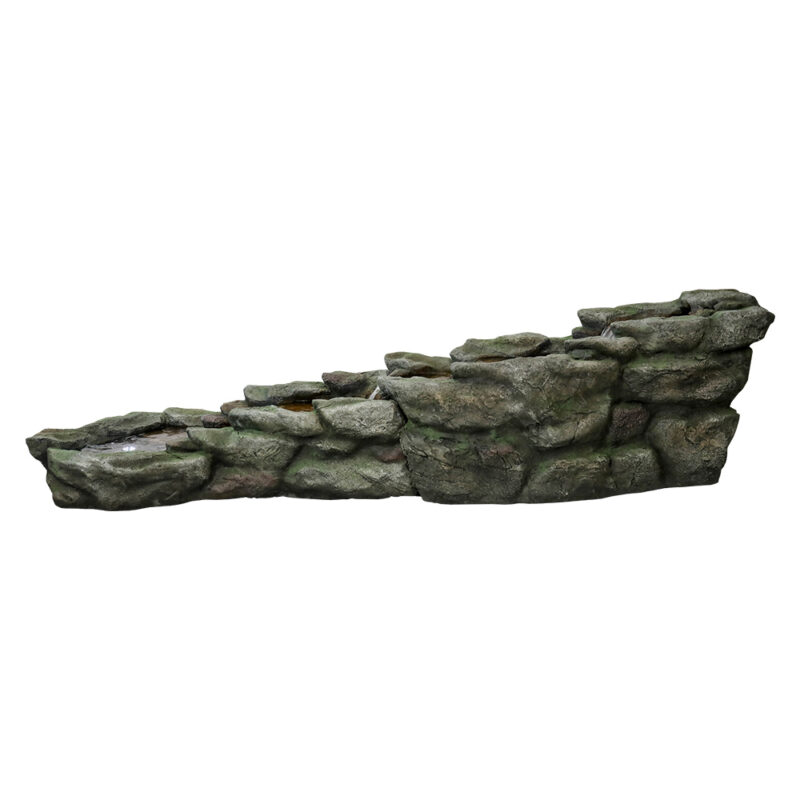
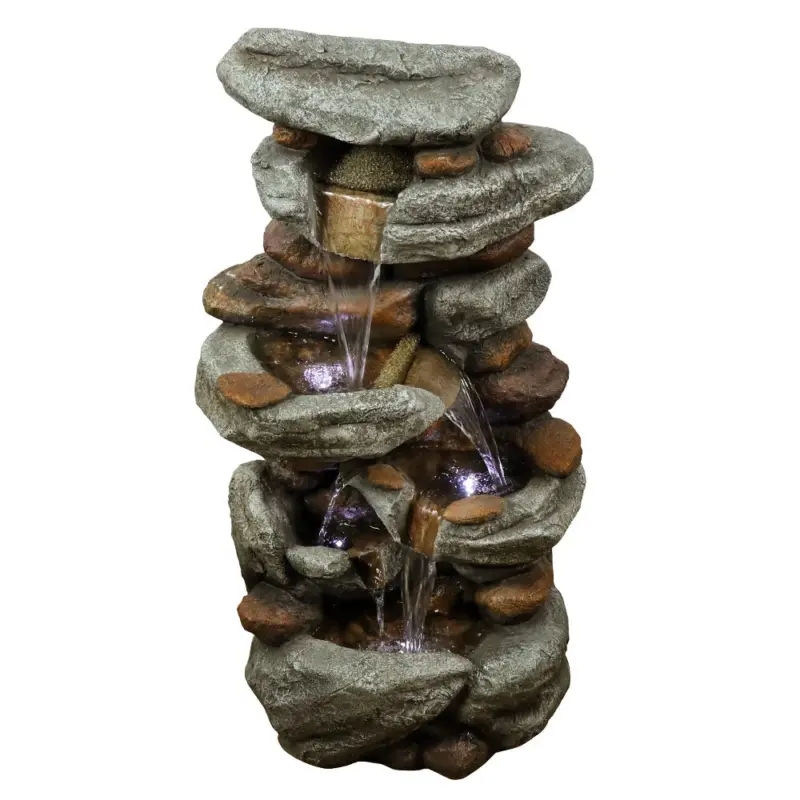
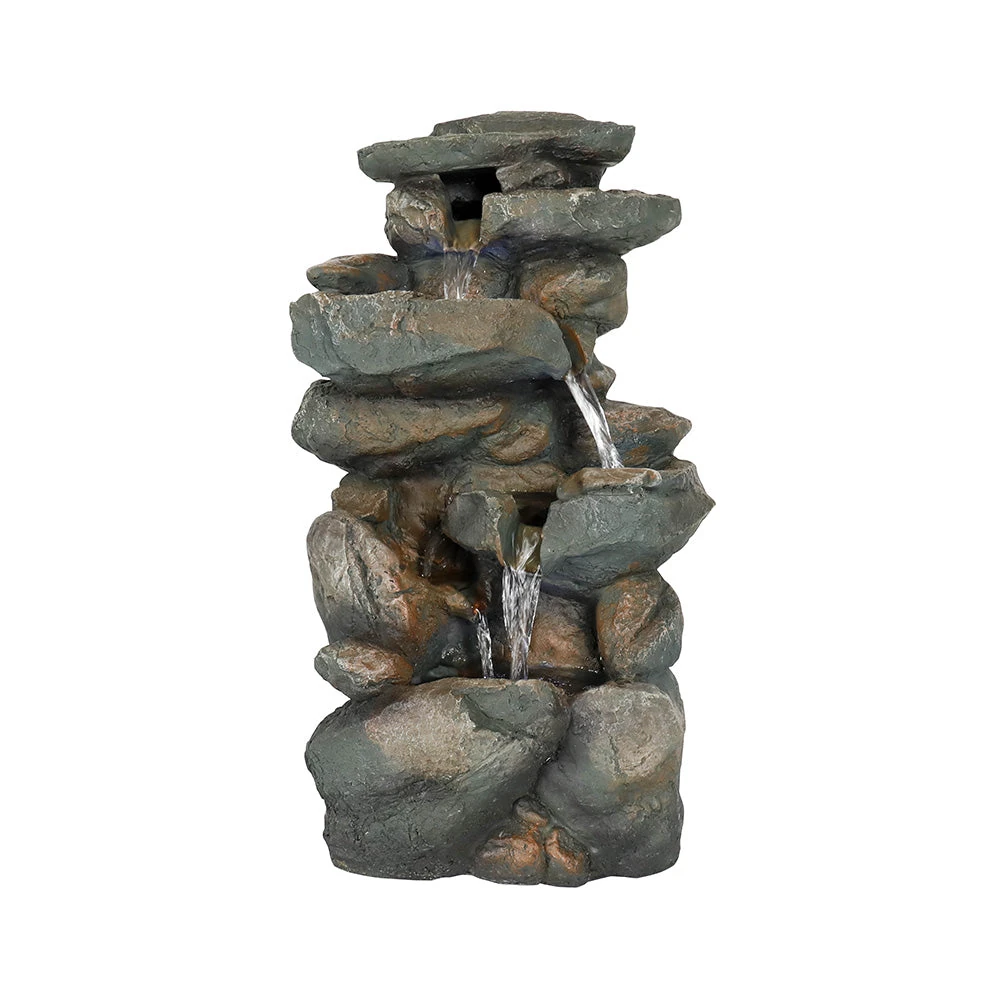
48″ H 7-Tiered Stacked Shale
$679.99
- Realistic shale texture & moss pockets
- 20-watt panel & 360 GPH pump
- 3-year freeze warranty
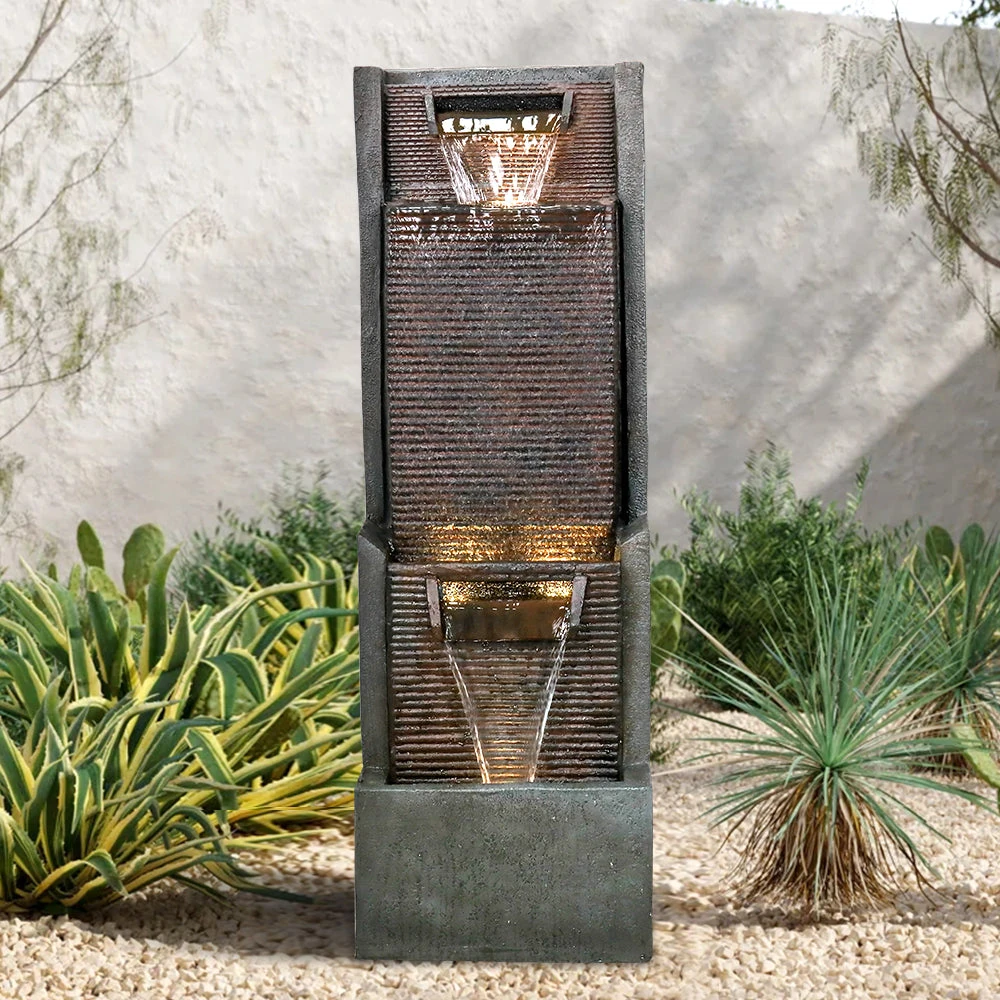
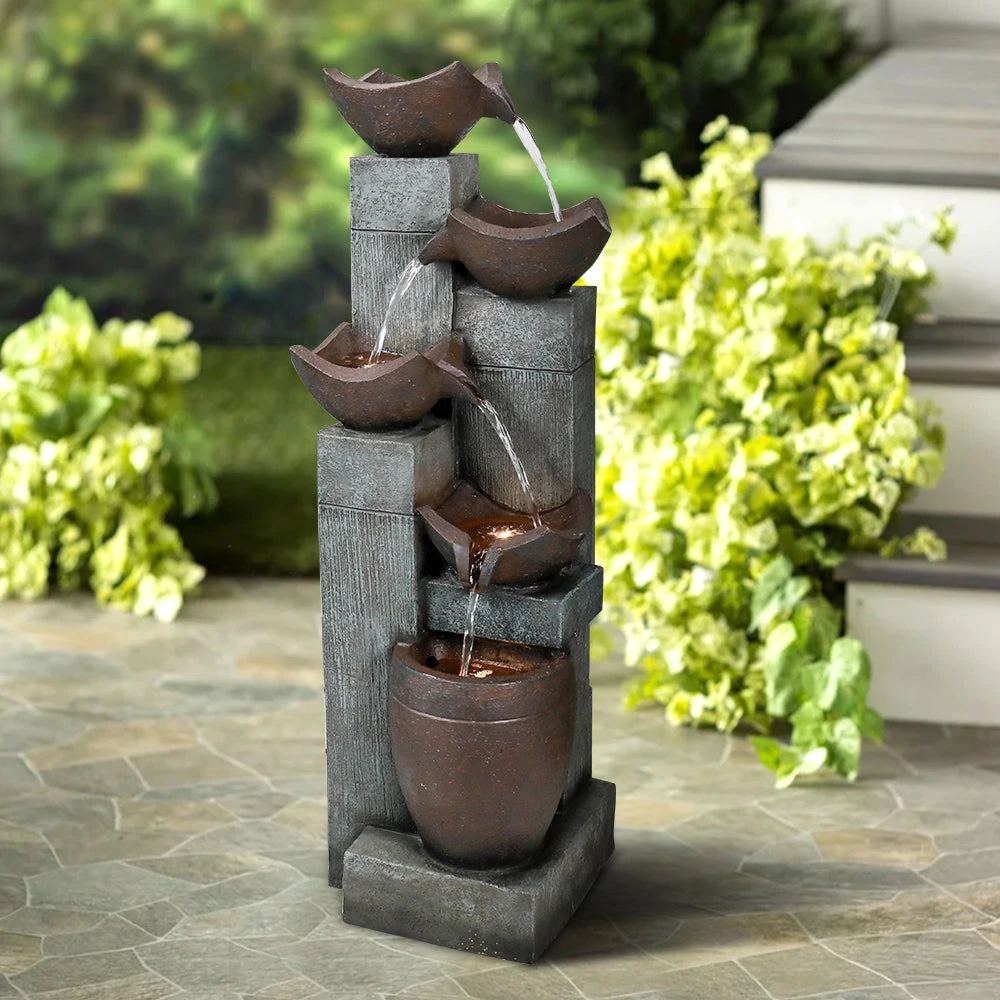
39.3″H Modern Garden Fountain
$239.99
- Sleek slate-look resin tiers
- 15-watt panel & 264 GPH pump
- Contemporary zen styling
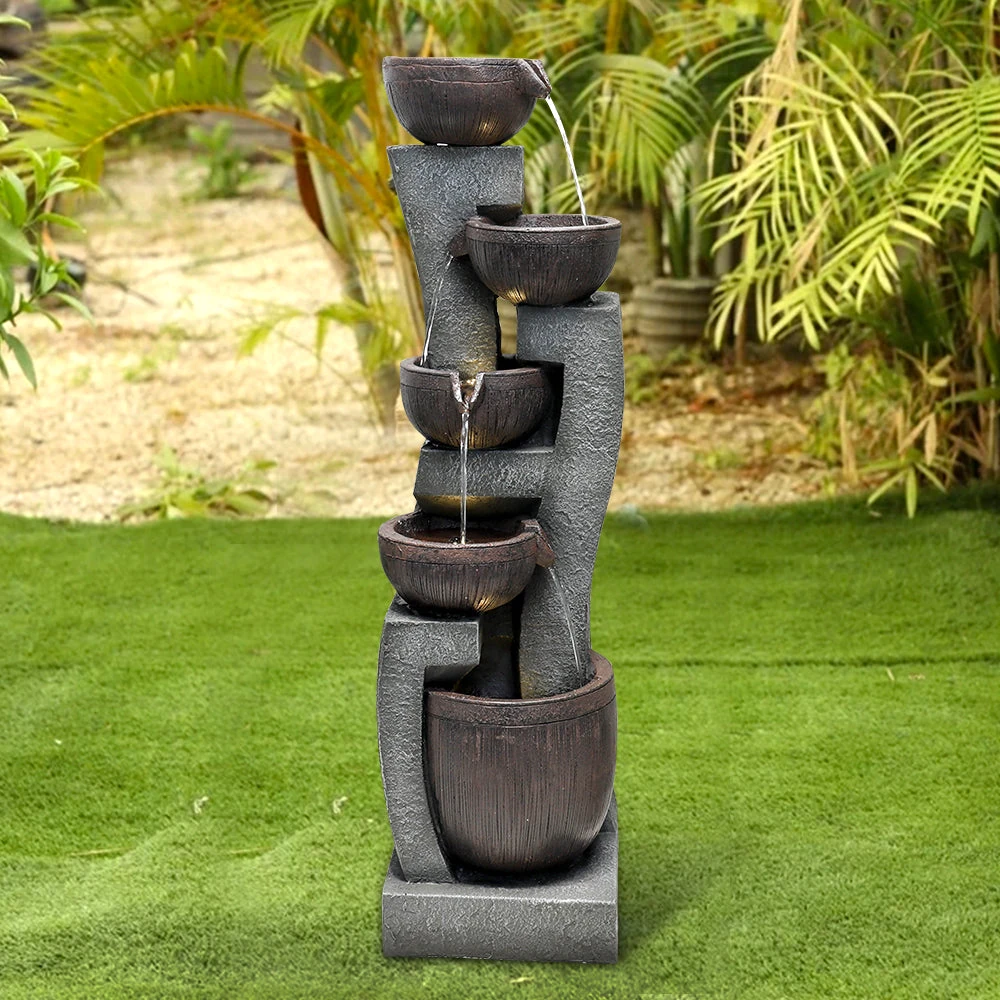
43.7″H 5-Tier Water Fountain
$238.99
- Classic European curves
- 15-watt panel & 250 GPH pump
- Integrated hidden battery box
Which One Should You Choose?
- Best for Beginners: 39.7” 5-Tier Garden—cheapest, tool-free, forgiving of partial shade.
- Best for Style Points: 48” Stacked Shale—hyper-realistic stone, triple-tier warranty, dominates large patios.
- Best for Modern Décor: 39.3” Modern—clean lines match minimalist furniture, still under $250.
- Best for Bird Lovers: 43.7” European—wide bowls act as mini birdbaths, LED ring attracts evening hummingbirds.
Running Costs, Winterizing & 5-Year ROI

Because outdoor solar waterfalls consume zero grid energy, annual operating cost equals the price of topping off evaporated water—about $8–$12 for a 5-tier system in arid zones. Compare that with a 120-watt AC pump: $62/year at 2025 average rates, plus electrician trenching $800–$1,500.
Winterizing Checklist (Zones ≤ 32 °F)
- Drain completely; trapped water expands 9% on freeze and cracks resin.
- Remove pump & store indoors; magnetic rotors can micro-fracture.
- LiFePO4 battery tolerates –4 °F but capacity drops 30%; disconnect if sub-zero nights persist.
- Invert top tier to prevent ice weight sag.
Over five years, a $240 solar unit saves roughly $310 in electricity plus $1,000 in install labor, netting a 247% cash-on-cash return even before home-value uplift.
FAQ: Cloudy Days, Algae, Pets & More
Q1. Will the pump run on completely cloudy days?
A 2025 mono-panel still outputs 15–20% of rated wattage under heavy overcast. With an MPPT controller you’ll see roughly 40 GPH instead of 200 GPH—a gentle trickle, not a stop.
Q2. How do I stop algae without chemicals?
Empty and brush every 14 days; add a small barley straw bundle (natural algicide). Keep fountain out of midday overhead sun by angling panel slightly east—plants win, algae loses.
Q3. Is the water safe for dogs and cats?
Yes—solar pumps use low-voltage DC; even if cord is chewed, shock risk is near zero. Just secure cable in decorative conduit to prevent tripping.
Q4. Can I convert my existing AC fountain?
Absolutely. Swap the AC pump for a 12 V DC solar pump (matching head height), add panel + battery; total retrofit cost averages $120.
Q5. Do I need to bring the entire fountain inside for winter?
Only if temps routinely drop below 20 °F for weeks. Otherwise, drain, remove pump & battery, cover with a breathable tarp; resin can handle brief freezes.