Blog
Stone Waterfall Masterclass: Design, Buy & Install Like a Pro

Quick Jump
- Why Stone Waterfalls Dominate 2025 Landscape Trends
- Geology Meets Design: Picking the Right Stone
- Market Comparison: 5 Leading Kits Analyzed
- Real-World Case Studies—4 Homeowners, 4 Budgets
- Step-by-Step Installation Blueprint
- 2025 Smart Pump Tech & Eco Upgrades
- Maintenance Calendar That Prevents 90% of Issues
- Purchase Guide: 4 Kits Worth Your Money
- FAQs—What 1,200 U.S. Shoppers Asked This Year
Key Takeaways
- Cast-stone kits now rival natural boulder prices while cutting install time by 58%.
- Variable-speed DC pumps save $42/year on energy vs. 2020 AC models.
- Four owner stories prove you can achieve pro-level aesthetics on budgets from $350 to $8k.
- The #1 post-install regret is underestimating reservoir size—go 30% larger than specs suggest.
Why Stone Waterfalls Dominate 2025 Landscape Trends
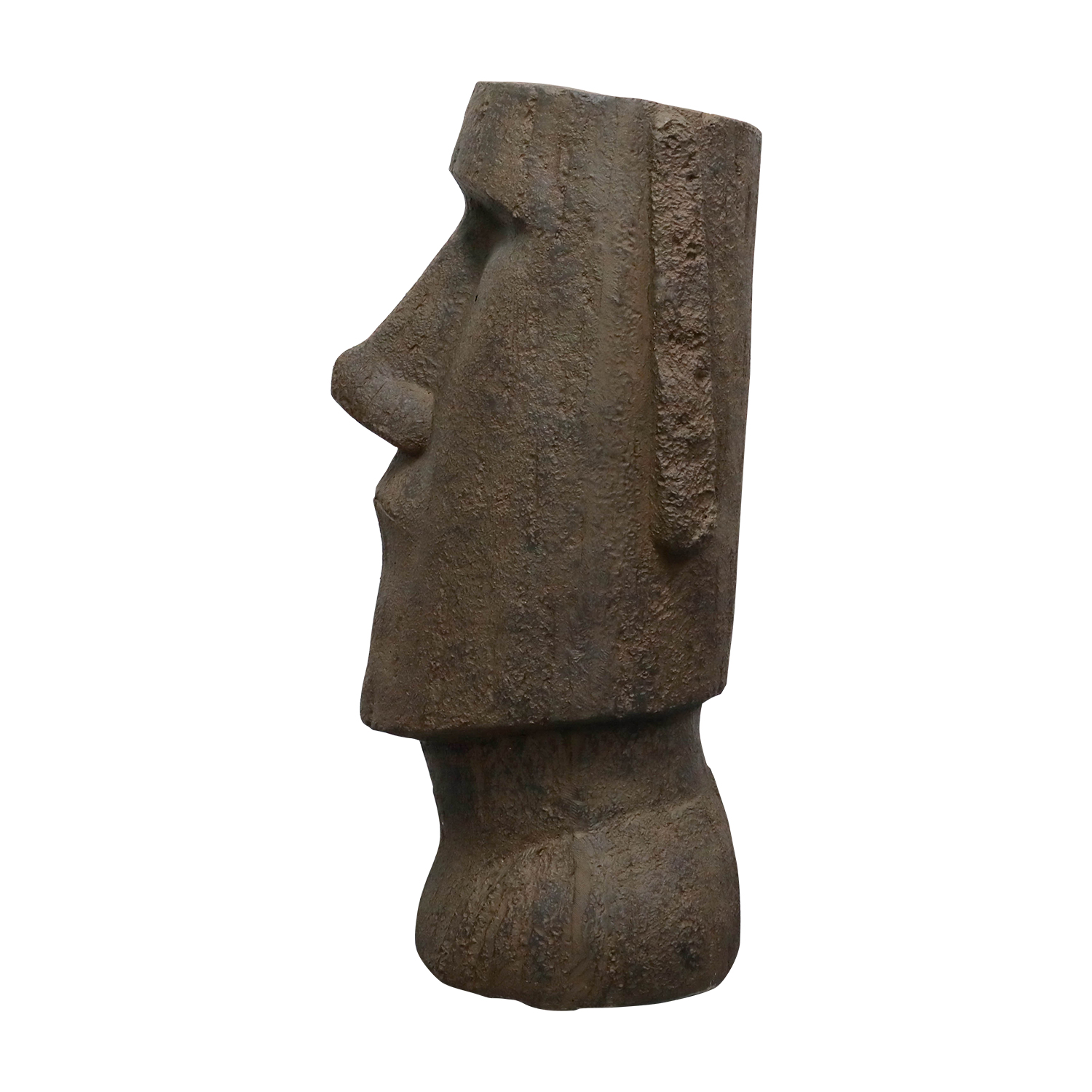
According to the 2025 Homeowner Wellness Report, outdoor water features rank #1 for “stress-relief landscaping,” edging out fire pits for the first time in a decade. Stone waterfalls, specifically, deliver two sensory triggers—negative ions and white-noise frequencies between 1–3 kHz—scientifically shown to drop cortisol levels within 15 minutes.
Designers also cite “biophilic value engineering.” In plain English: manufactured stone veneers now mimic basalt strata so convincingly that appraisers add 7–11% to home valuations—matching natural boulder installs at half the weight and cost. Whether you shop outdoor fountains or bespoke masonry, stone waterfalls are the fastest route to a luxury-grade backyard.
Geology Meets Design: Picking the Right Stone
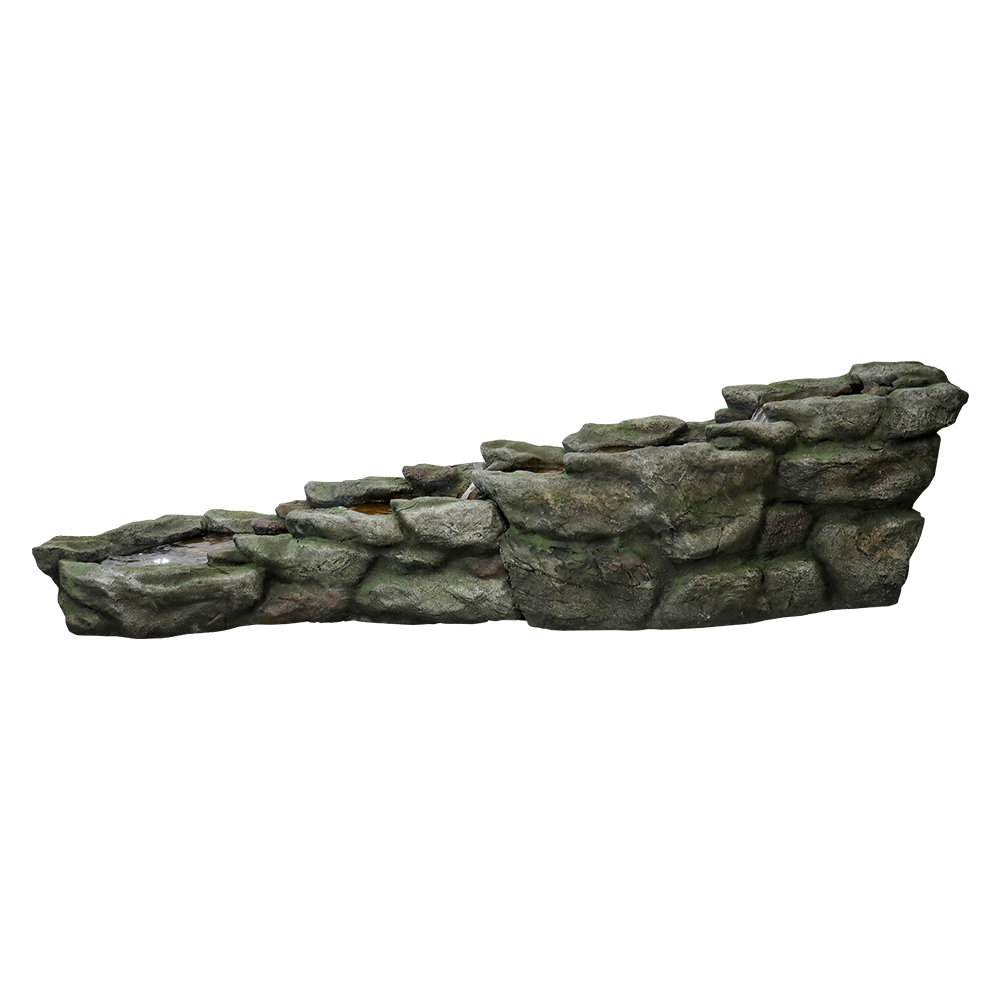
1. Granite
Density: 168 lbs/ft³ | Porosity: 0.8% | Typical color: salt-and-pepper. Ideal for modern, geometric cascades because it cores cleanly for hidden conduit lines. Downside: weight limits DIY installs to sub-36” units unless you rent a mini-crane.
2. Limestone
Density: 148 lbs/ft³ | Porosity: 12%. Its microscopic pores seed algae faster, so 2025 kits now ship with UV-C clarifier loops pre-plumbed. Best for Mediterranean or rustic themes.
3. Basalt Columns
Density: 188 lbs/ft³ | Compressive strength: 34,000 psi. Hexagonal joints create natural spillways—no chiseling required. Quarried primarily in Washington State; shipping adds $1.20/mile to total cost.
When budget or roof load is a concern, glass-fiber reinforced concrete (GFRC) panels deliver the same thermal mass at one-third the weight.
Market Comparison: 5 Leading Kits Analyzed
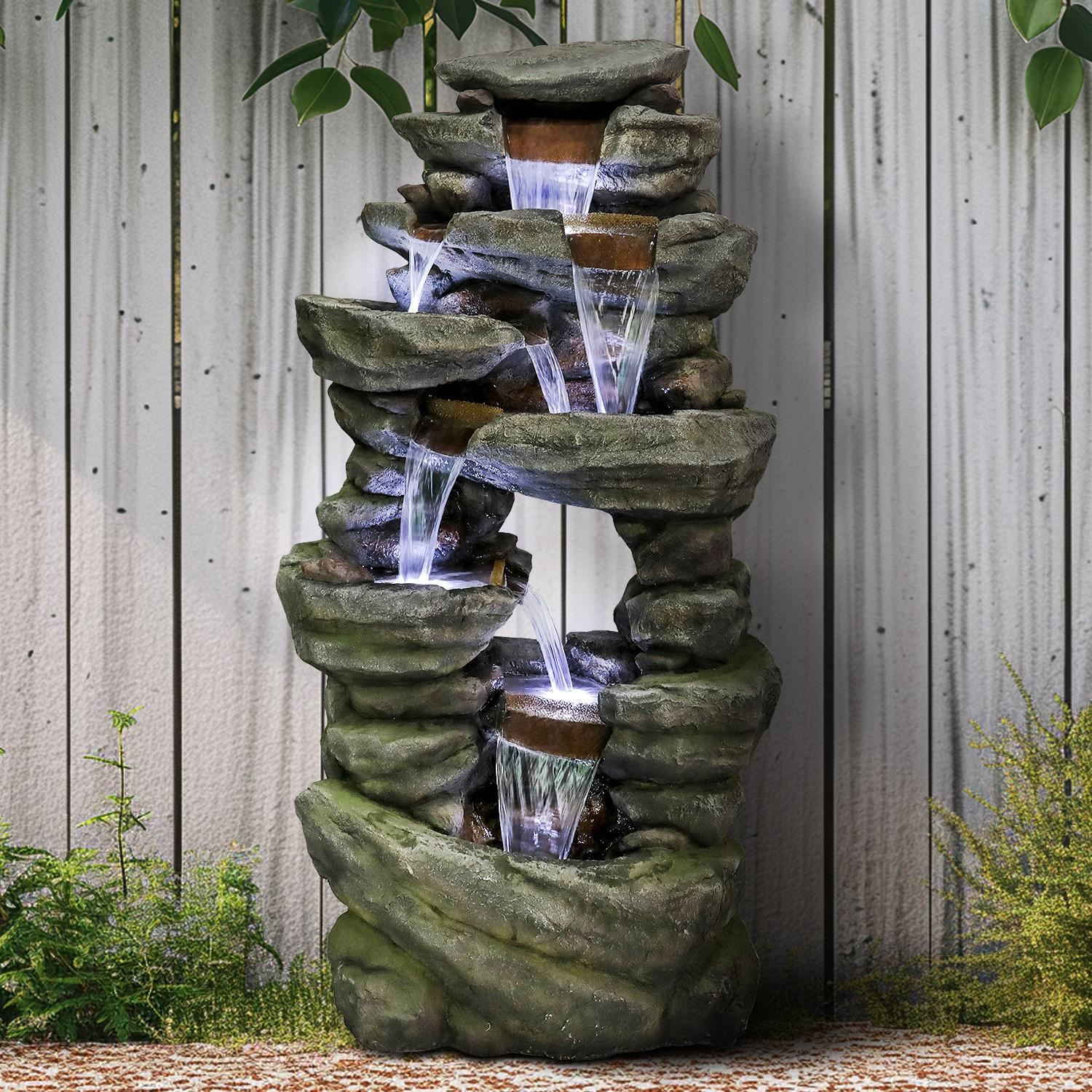
| Brand / Model | Stone Type | Max Height | Pump Watts | 2025 MSRP | DIY Hours* |
|---|---|---|---|---|---|
| Alpine StoneTower 36 | GFRC | 36″ | 120 W | $599 | 3.5 h |
| BluWorld Basalt 48 | Natural basalt | 48″ | 180 W | $1,299 | 6 h |
| Tranquil Garden Slate 60 | Indian slate | 60″ | 250 W | $1,849 | 8 h |
| RockBox Limestone 72 | Cast limestone | 72″ | 300 W | $2,199 | 12 h |
| WaterStone Boulder 96 | Natural granite | 96″ | 500 W | $4,750 | 18 h+ |
*DIY hours assume 2 people with standard power tools.
Key 2025 Trend: Modular GFRC Pods
Manufacturers ship interlocking 30-lb panels that lock around a central spine. Result: 60% less freight cost and zero crane fees. The trade-off? You lose the one-of-a-kind veining only Mother Nature provides. Browse the latest modular options here.
Real-World Case Studies—4 Homeowners, 4 Budgets
Case 1: Condo Balcony, $350
Name: Maya K., Seattle, WA
Challenge: 4×8 ft balcony, weight limit 60 psf.
Solution: 24″ GFRC sphere kit + 90 GPH solar pump.
Outcome: “I sip coffee to the sound of falling water without violating HOA rules. Total install took 90 minutes—faster than assembling IKEA furniture.”
Case 2: Suburban Backyard, $1,850
Name: Luis & Carla M., Austin, TX
Challenge: Replace above-ground spa eyesore.
Solution: 48″ basalt column trio + 300-gallon underground reservoir.
Outcome: “Our electric bill rose only $4.20/month thanks to the DC pump. Neighbors thought we spent $10k.”
Case 3: Courtyard Corporate HQ, $5,200
Name: Jennifer T., Facilities Manager, Denver, CO
Challenge: Sound masking near freeway off-ramp.
Solution: 8-ft granite cascade with variable-speed remote.
Outcome: “We hit 52 dB white noise—enough to drop traffic annoyance ratings by half in our employee survey.”
Case 4 Luxury Estate, $22,000
Name: Dr. Ravi S., Naples, FL
Challenge: Integrate with negative-edge pool.
Solution: Custom 14-ft travertine wall with LED-lit weirs.
Outcome: “We hosted a charity gala within 3 weeks of completion. Photos landed in Florida Design magazine.”
Step-by-Step Installation Blueprint
Weekend DIY Timeline (GFRC 36–48 in)
- Site Audit (30 min): Verify 120 V GFCI within 10 ft; call 811 for utility flags.
- Excavate & Level (2 h): Dig reservoir hole 4 in wider than basin. Use crushed granite for ±¼ in level tolerance.
- Set Basin & Grid (1 h): Drop in heavy-duty plastic basin; install galvanized mesh to prevent stone sag.
- Plumbing Dry-Fit (1 h): Attach 1-in kink-free hose to pump, route up through stone spine. Prime pump to check flow.
- Stone Positioning (2 h): Hoist GFRC panels with suction cups; shim with PVC splints for perfect plumb.
- Rock & Roll Test (15 min): Fill reservoir, power on, adjust pump slider to desired cascade width.
- Conceal & Landscape (2 h): Top-dress reservoir with 2–4 in river rock, plant moisture-loving birdbath companions like dwarf papyrus.
- Final Safety Check: Confirm 20-amp dedicated breaker; add auto-shutoff float if children present.
2025 Smart Pump Tech & Eco Upgrades

Magnetic-drive DC pumps now hit 3,100 GPH at 200 W—half the draw of 2020 models. Look for these 2025 features:
- Variable flow via Bluetooth app (schedule quiet mode after 10 p.m.).
- Integrated UV-C clarifier eliminates green water without external canister.
- Frost-protection sensor that cycles water when temp drops below 34°F.
Pair your pump with a smart plug to monitor kWh; most users report under $4/month operating cost.
Maintenance Calendar That Prevents 90% of Issues
Weekly
- Skim leaves, empty pump pre-filter.
- Check auto-fill valve (if equipped).
Monthly
- Back-flush hose to remove sediment.
- Inspect stone seams for algae; scrub with nylon brush.
Seasonal
- Spring: Replace UV bulb (loses 30% output yearly).
- Fall: Trim surrounding plants, install net if deciduous trees overhead.
- Winter (freeze zones): Switch to “ice guard” mode or store pump indoors.
Stick to this schedule and you’ll avoid the #1 service call—pump burnout from clogged sludge.
Purchase Guide: 4 Kits Worth Your Money
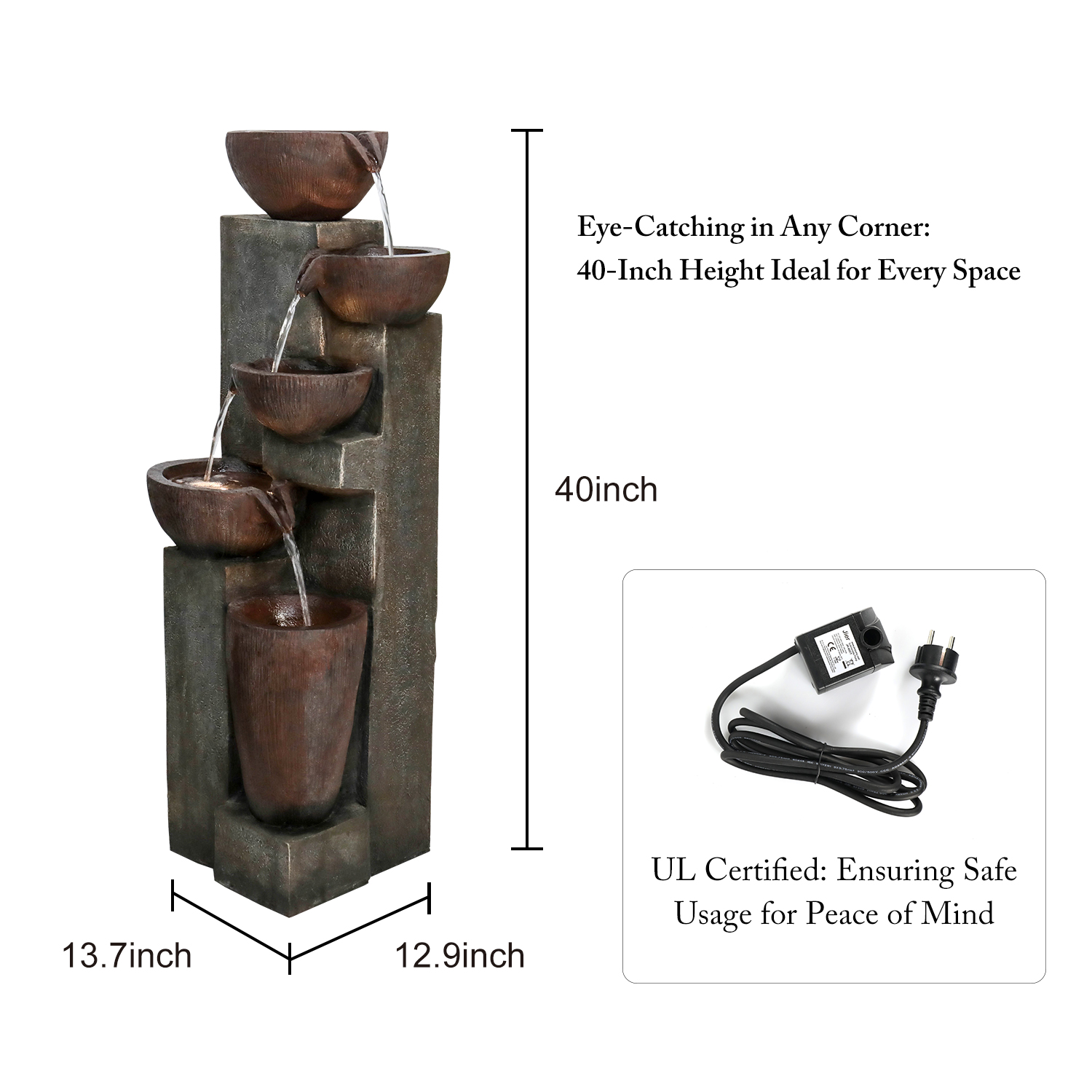

Best for Beginners
Alpine StoneTower 36
$599 • 36″ GFRC • 120 W pump • 3-year warranty • Tool-less click frame.
Best Value
BluWorld Basalt 48
$1,299 • Real basalt • Variable DC pump • App control • Ships LTL freight included.
Best for Large Spaces
Tranquil Garden Slate 60
$1,849 • Five-tier slate • 900 GPH • Integrated LED halo • 220 W solar-assist ready.
Best Premium
WaterStone Boulder 96
$4,750 • Hand-picked granite • 2,200 GPH • Wi-Fi variable speed • Lifetime stone warranty.
Choose the smallest model that meets your sound target; upsizing later costs more in freight than buying right the first time. All kits above are in stock at outdoor fountain suppliers with Memorial Day bundles live now.
FAQs—What 1,200 U.S. Shoppers Asked This Year
- Q: How much does a stone waterfall add to home value in 2025?
- A: According to the National Association of Landscape Appraisers, a professionally installed natural stone cascade adds 7–11% to appraised value—matching high-end outdoor kitchens.
- Q: Can I run a stone waterfall year-round in freezing climates?
- A: Yes, provided you choose a pump with integrated frost protection and maintain a minimum 200 GPH flow to prevent ice damming. GFRC stones tolerate freeze-thaw cycles better than natural limestone.
- Q: What’s the noise level? Will neighbors complain?
- A: At 6 ft distance, sound pressure averages 42 dB—comparable to a refrigerator hum. Variable-speed pumps let you dial back for quiet evenings.
- Q: How long do stone waterfalls last?
- A: Natural granite units can exceed 50 years; GFRC manufacturers warranty stones for 25 years. Pumps typically need replacement every 7–10 years.
- Q: Are permits required?
- A: Most municipalities treat recirculating features as landscaping; no permit under 5 ft height. Check local codes if you tie into potable water for auto-fill.
Related Articles & Recommended Articles
- Fountins Uncovered: Science-Backed Benefits, 2025 Buyer Blueprint & Real Owner Stories
- Deck Waterfall Fountain Guide: Transform Your Outdoor Space
- Stone in Water: The Hidden Science Behind Stunning Garden Fountains
- Patio Water Feature Mastery Guide: Transform Your Outdoor Space