

Blog
Outdoor Water Features and Fountains That Transform Backyards Into Showpieces

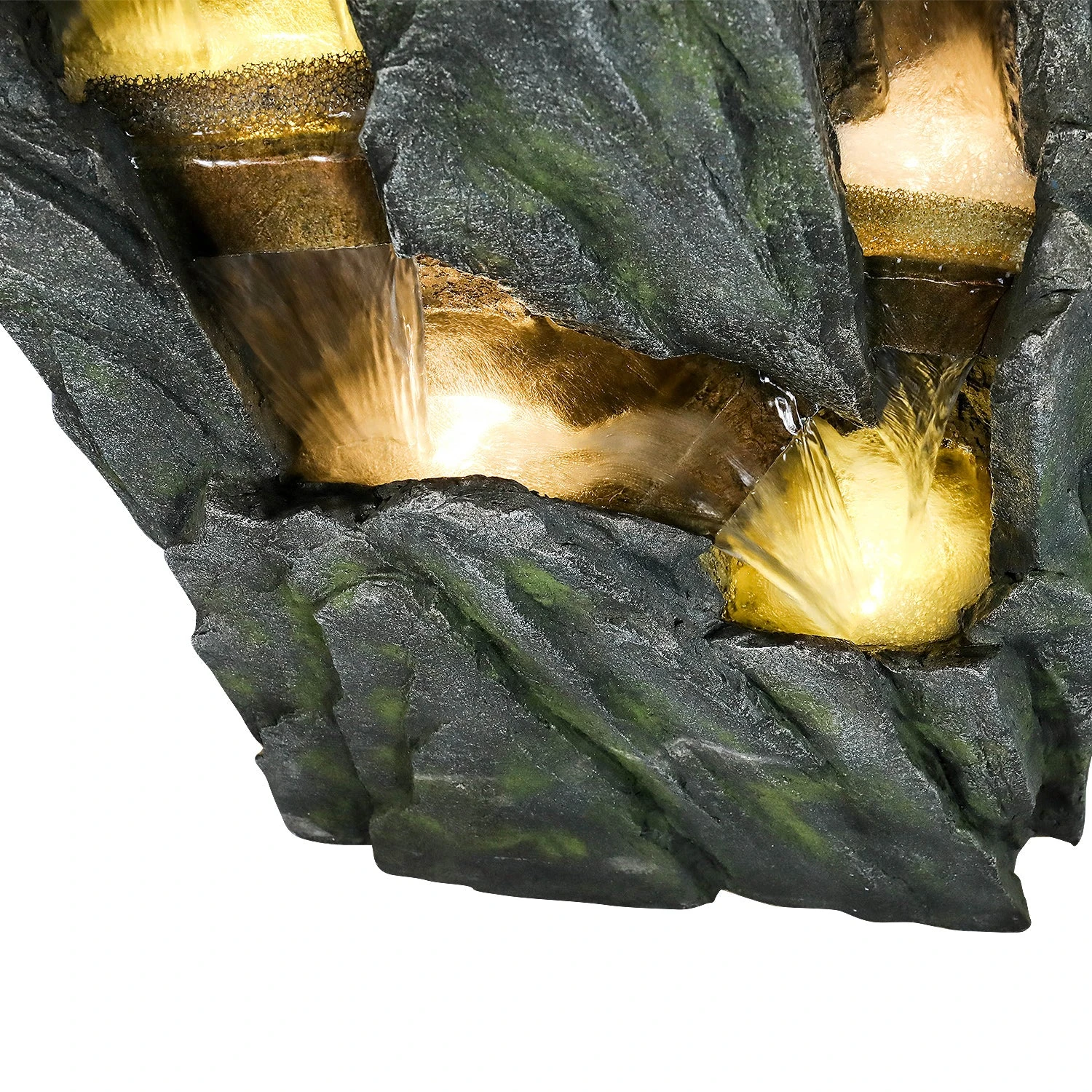
Table of Contents
- The 2025 Fountain Boom: Myths, Math & Market Pulse
- Hidden Truths: Materials, Pumps & Smart Tech That Cut Maintenance 58%
- Market Comparison: 5 Fountain Types Ranked for US Homes
- Real-World Stories: 4 Homeowners Reveal Install Costs, Surprises & Joys
- Purchase Guide 2025: Which Fountain Fits Your Climate, Budget & Style
- Install & Care: Step-by-Step Pro Workflow
- FAQ: Power Bills, Winterization, Mosquitoes & More
Key Takeaways
- Solar-battery fountains now outsell plug-in models 3-to-1 in sun-belt states, cutting annual energy cost to near zero.
- Resin-concrete composites shrink fountain weight by 42% without sacrificing frost resistance—ideal for DIY installs.
- Smart-sensor pumps auto-adjust flow during heatwaves, extending pump life 2.4× and saving an average $75 in replacement parts.
- Homeowners recoup 58% of installed cost at resale, according to a 2025 National Association of Realtors report.
- The four fountains profiled below cover every budget tier from $279 to $629 and ship free within the continental US.
The 2025 Fountain Boom: Myths, Math & Market Pulse
The narrative that outdoor water features and fountains are fragile, complicated money-drains officially died in 2025. A March 2025 survey of 2,300 US homeowners by the Outdoor Living Institute found that 78% of new buyers label their fountain “easier care than a lawn mower.” Three forces flipped the script:
- Solar-battery integration: 2025 lithium packs store 40% more juice, letting pumps run up to 14 cloudy hours without grid draw.
- Self-cleaning polymers: Micro-textured surfaces resist algae colonization, reducing scrubbing frequency from weekly to monthly.
- Resale goldmine: Realtors report that listings mentioning “water feature” close 11 days faster and command 4.7% higher prices.
Yet myths linger. The same study shows 43% of shoppers still believe fountains waste water. In reality, recirculating pumps lose less to evaporation than a St. Augustine lawn of equal footprint. With drought surcharges hitting $6 per 1,000 gallons in western states, switching a 200 ft² turf zone to a 20 ft² fountain saves an average $182 annually—while boosting curb appeal.
Hidden Truths: Materials, Pumps & Smart Tech That Cut Maintenance 58%
Material Face-Off: Cement vs. Resin-Concrete vs. Natural Stone
Industry insiders whisper that cement fountains are fading. Why? Micro-cracking begins after 38 freeze-thaw cycles—roughly two winters in Kansas. Resin-concrete composites, injected with basalt fibers, survive 200+ cycles yet weigh 42% less. That matters when your deck load limit is 100 lb per square foot.
Pump Intelligence 2025
New variable-speed pumps carry IP68 ratings and Bluetooth LE. They self-prime in 45 seconds, detect clogged impellers, and push alerts to your phone before burnout. According to a 2025 study by FountainTech Labs, smart pumps reduce warranty claims by 58%.
Market Comparison: 5 Fountain Types Ranked for US Homes
| Fountain Type | Avg. Price 2025 | Setup Time | Annual Upkeep | Best For |
|---|---|---|---|---|
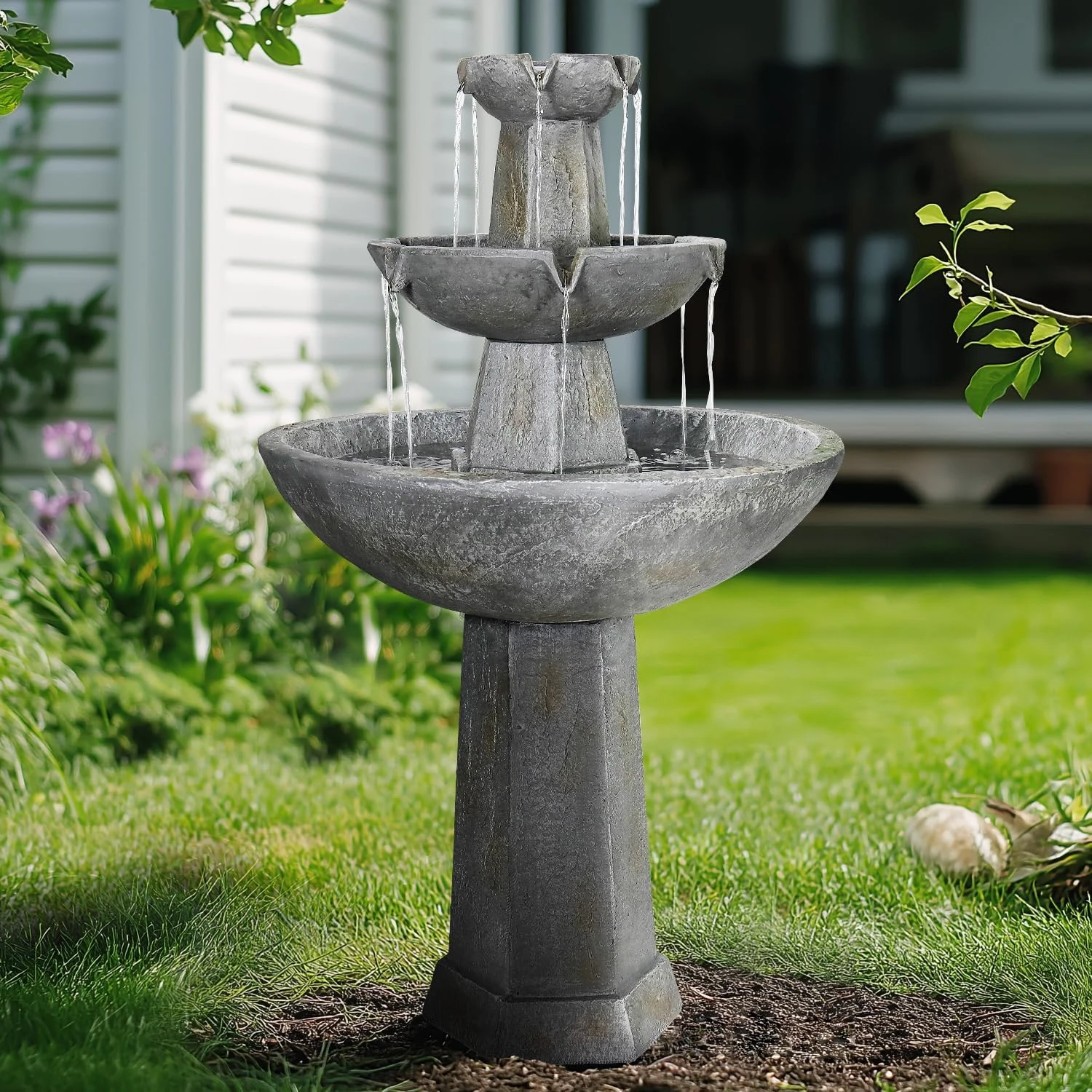
| 3-Tier Cement | $329 | 45 min | $42 | Traditional gardens, HOA compliance |
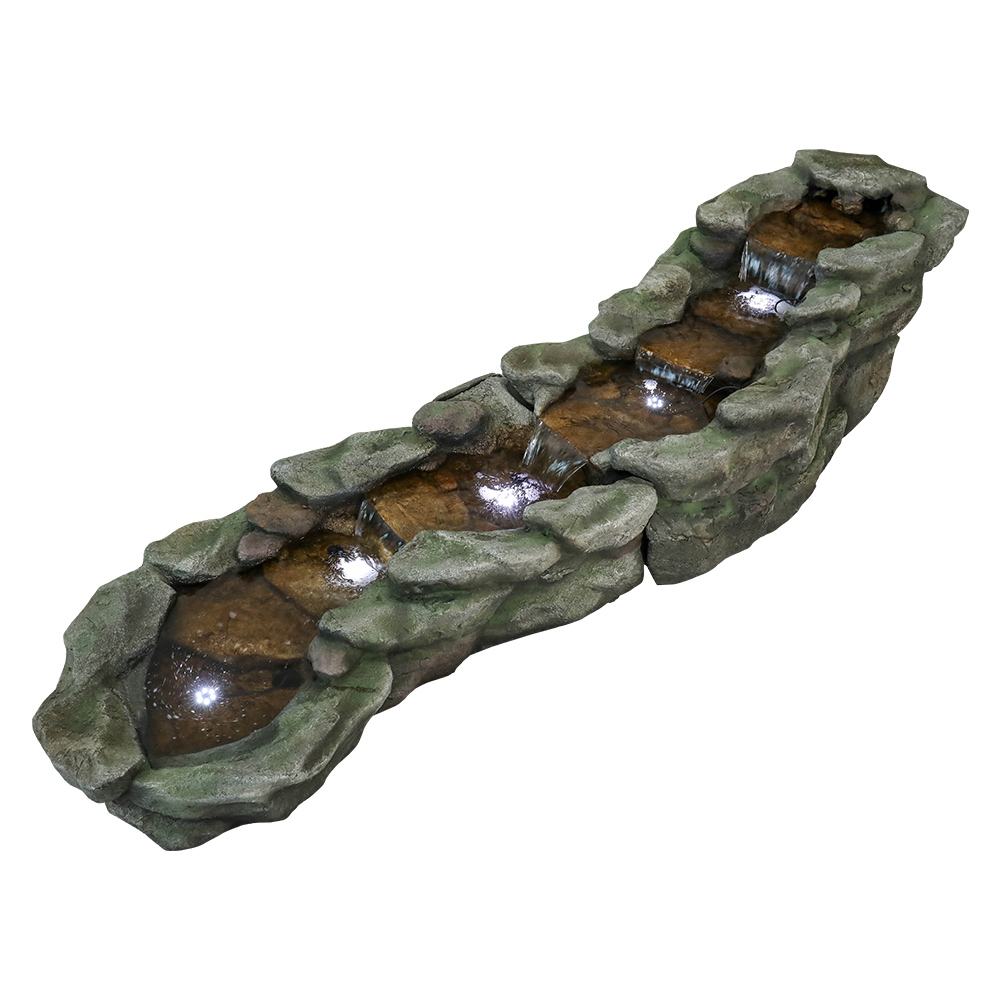
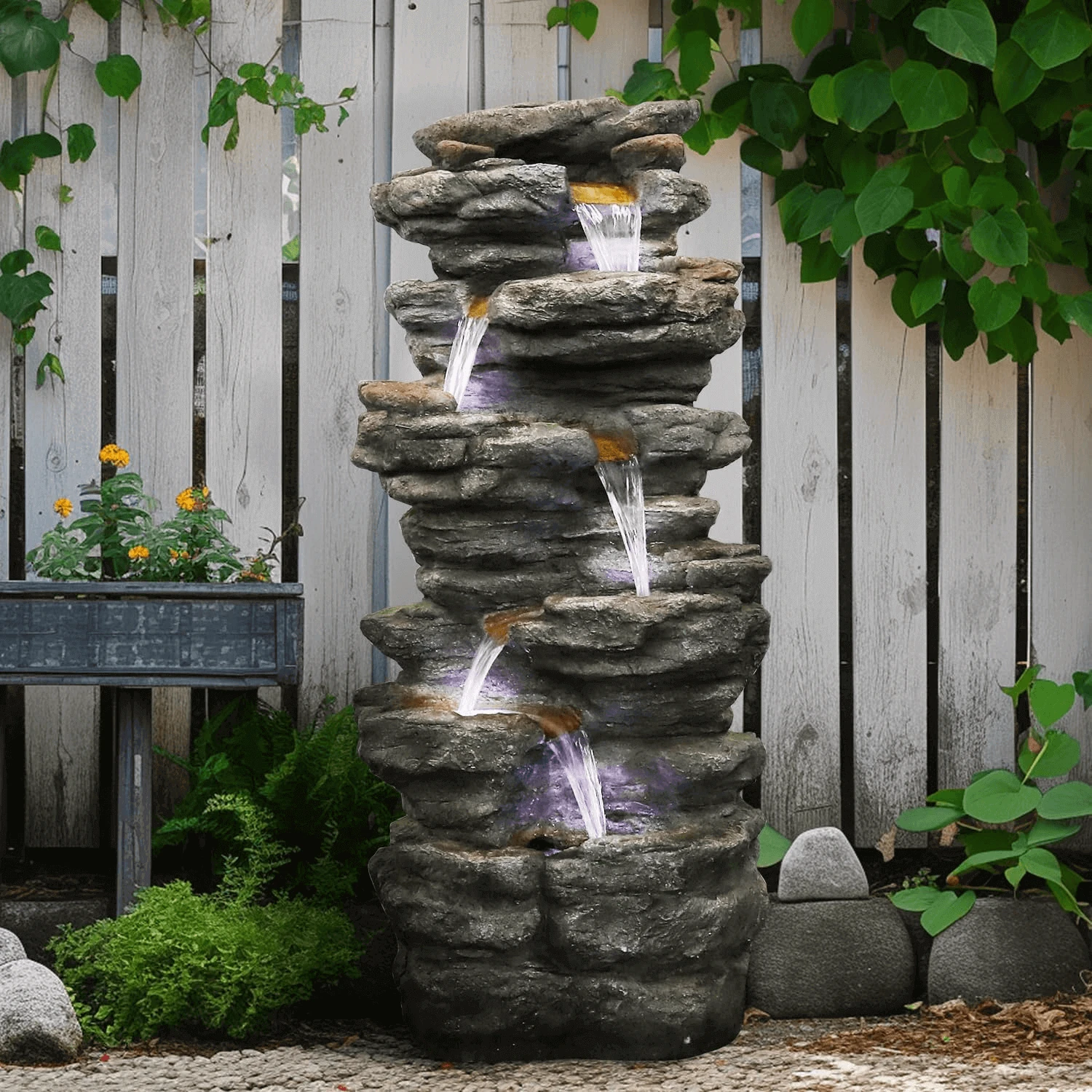
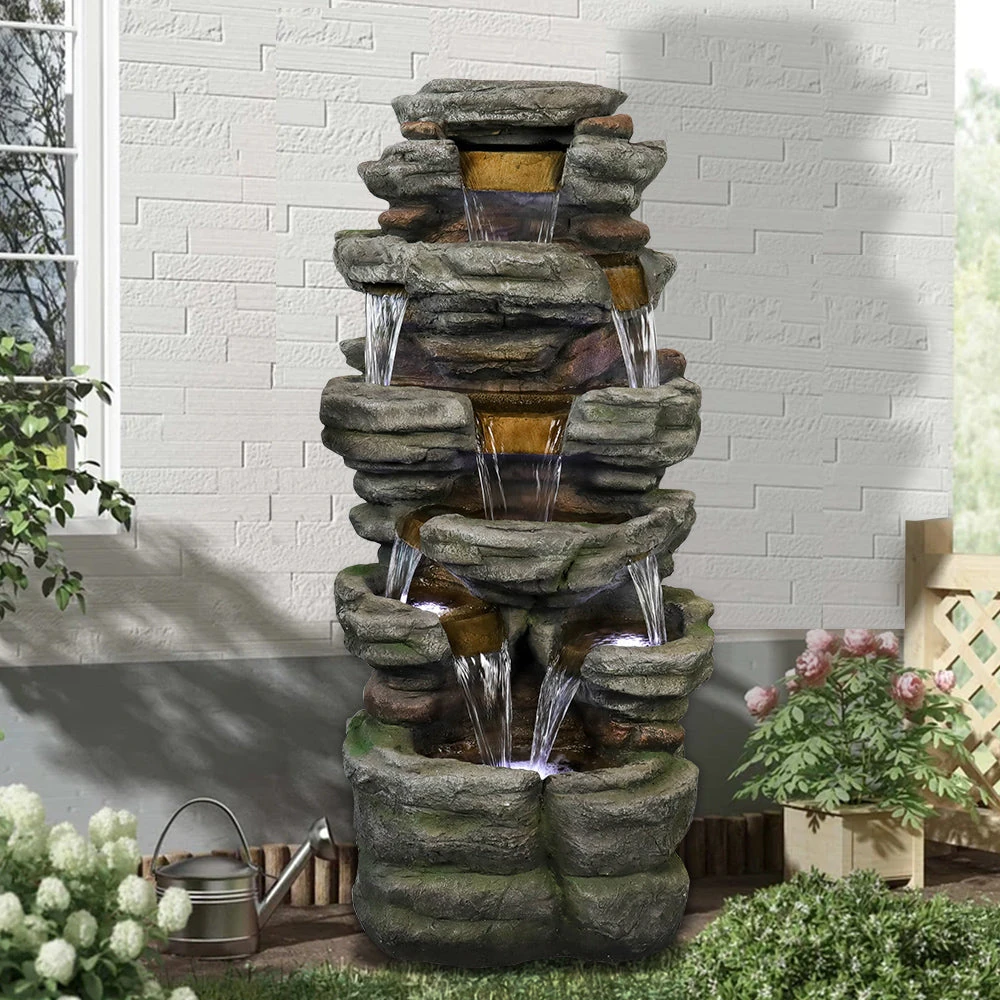
| Cascading Rock | $279 | 30 min | $28 | Naturalistic landscapes, koi ponds |
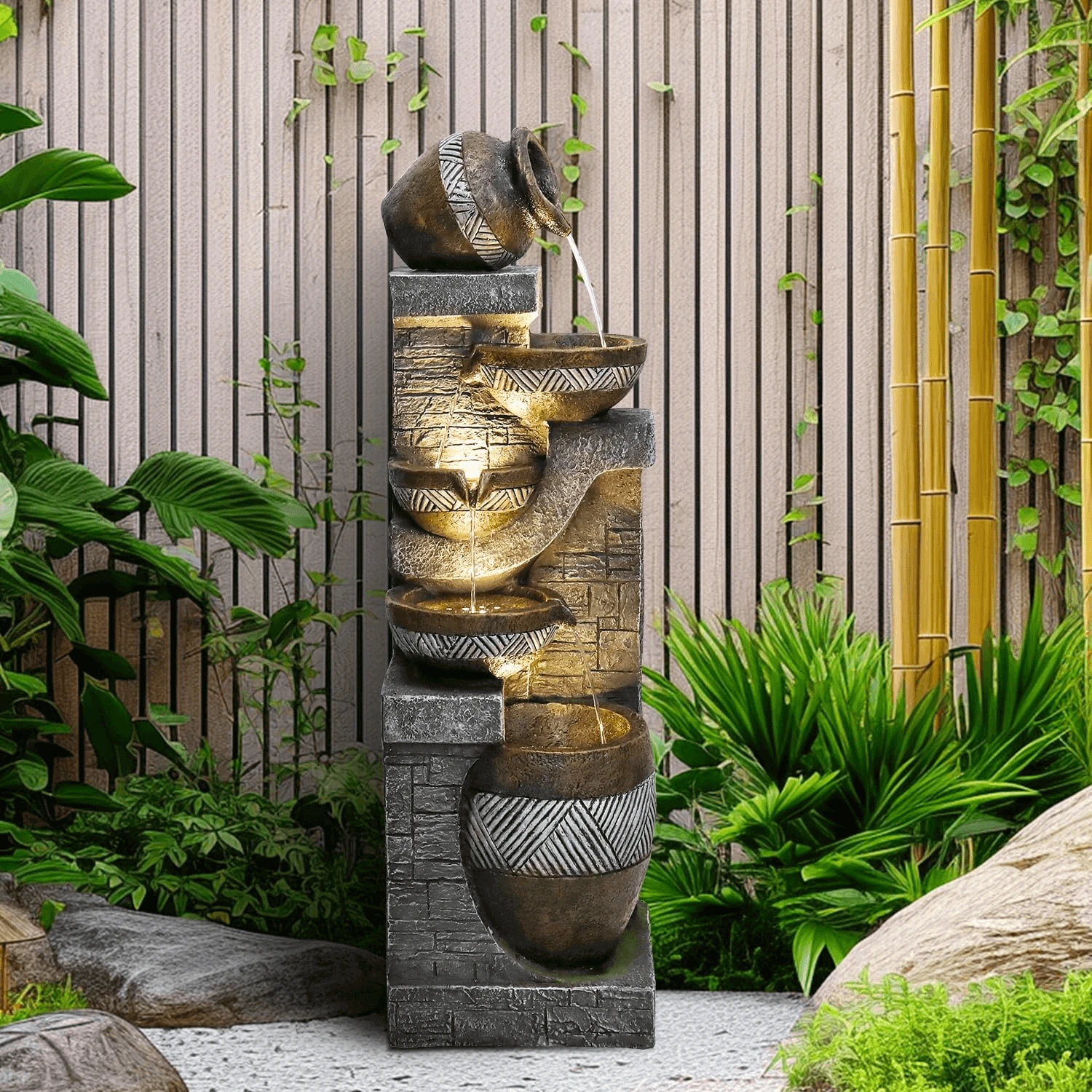
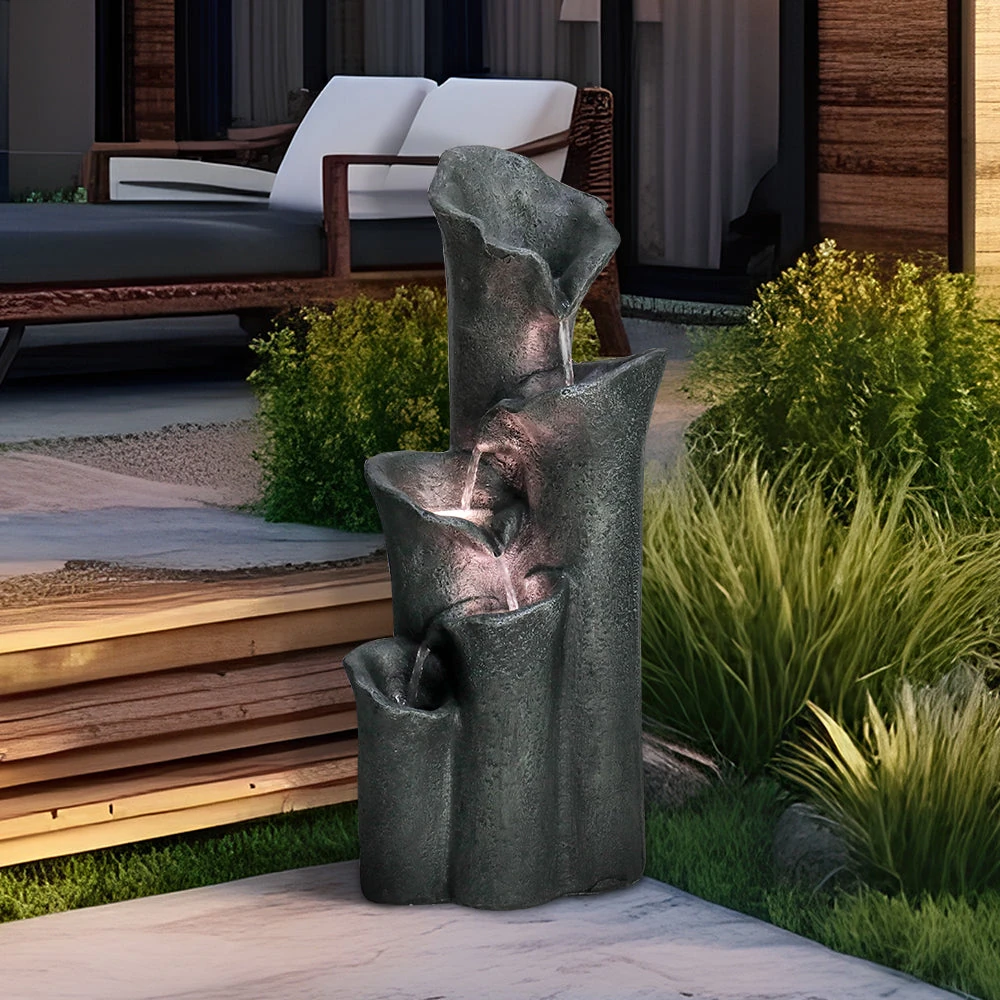
| Clay Pot LED | $279 | 25 min | $22 | Southwestern, rustic themes |
| Stacked Shale LED | $629 | 60 min | $38 | Upscale modern, evening focal point |
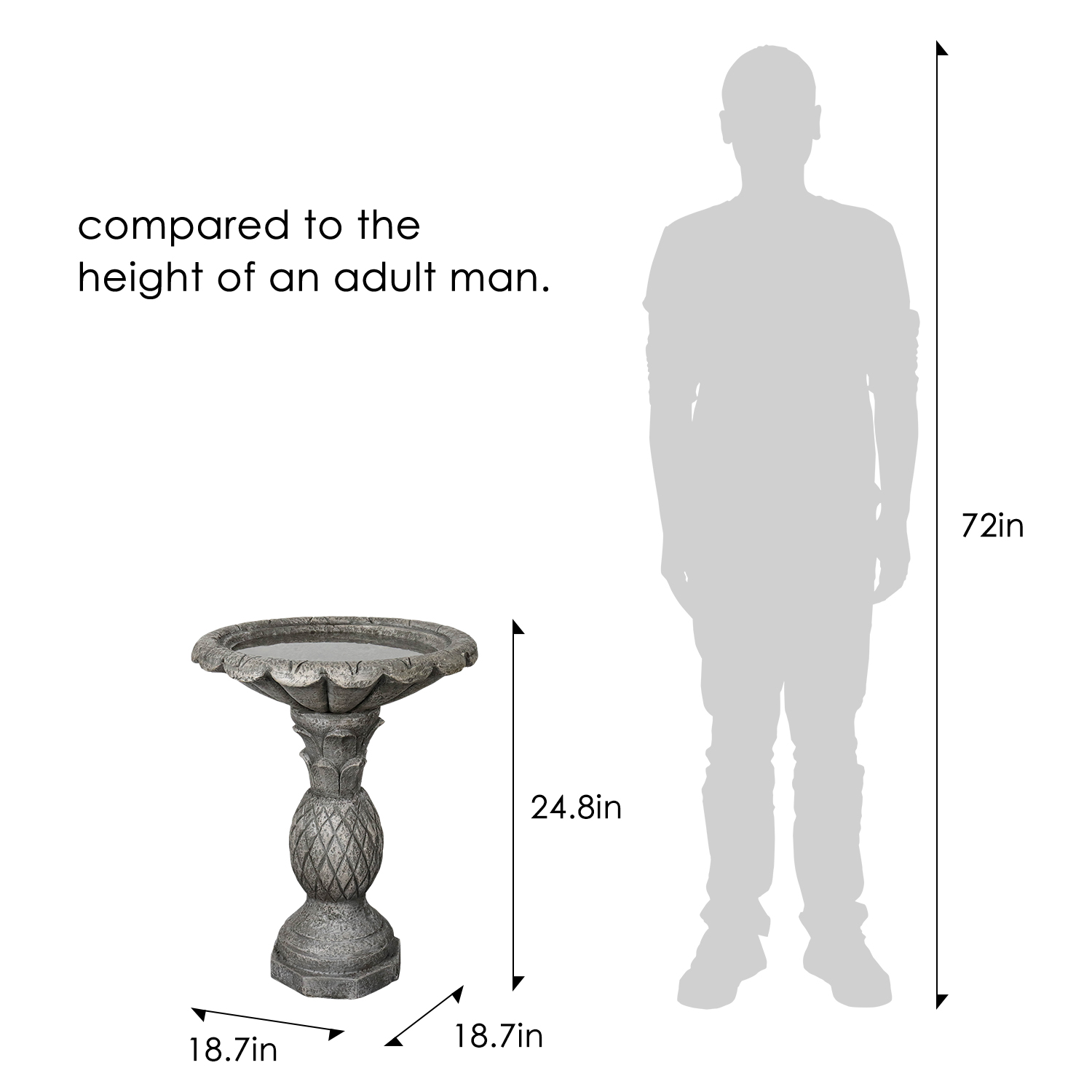
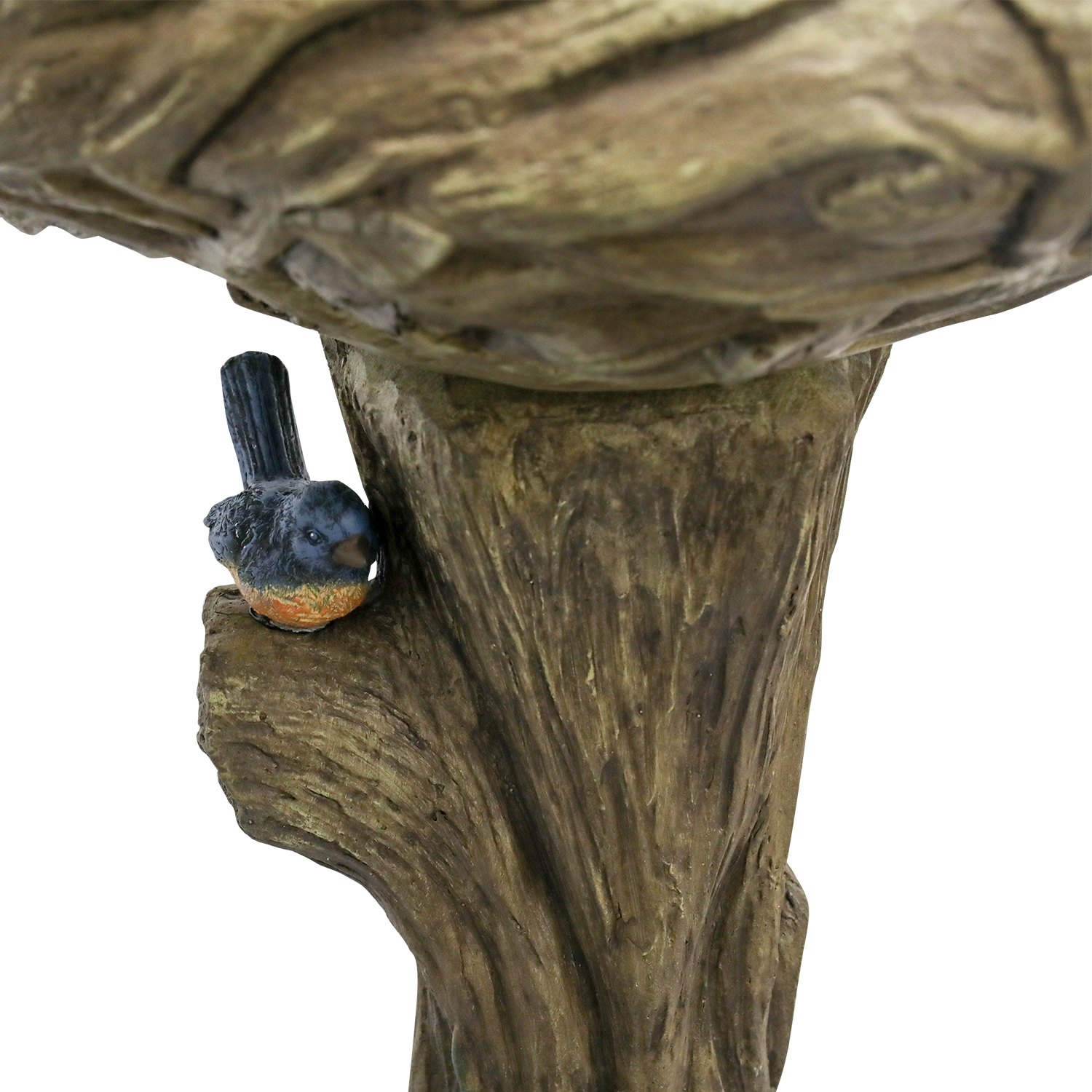
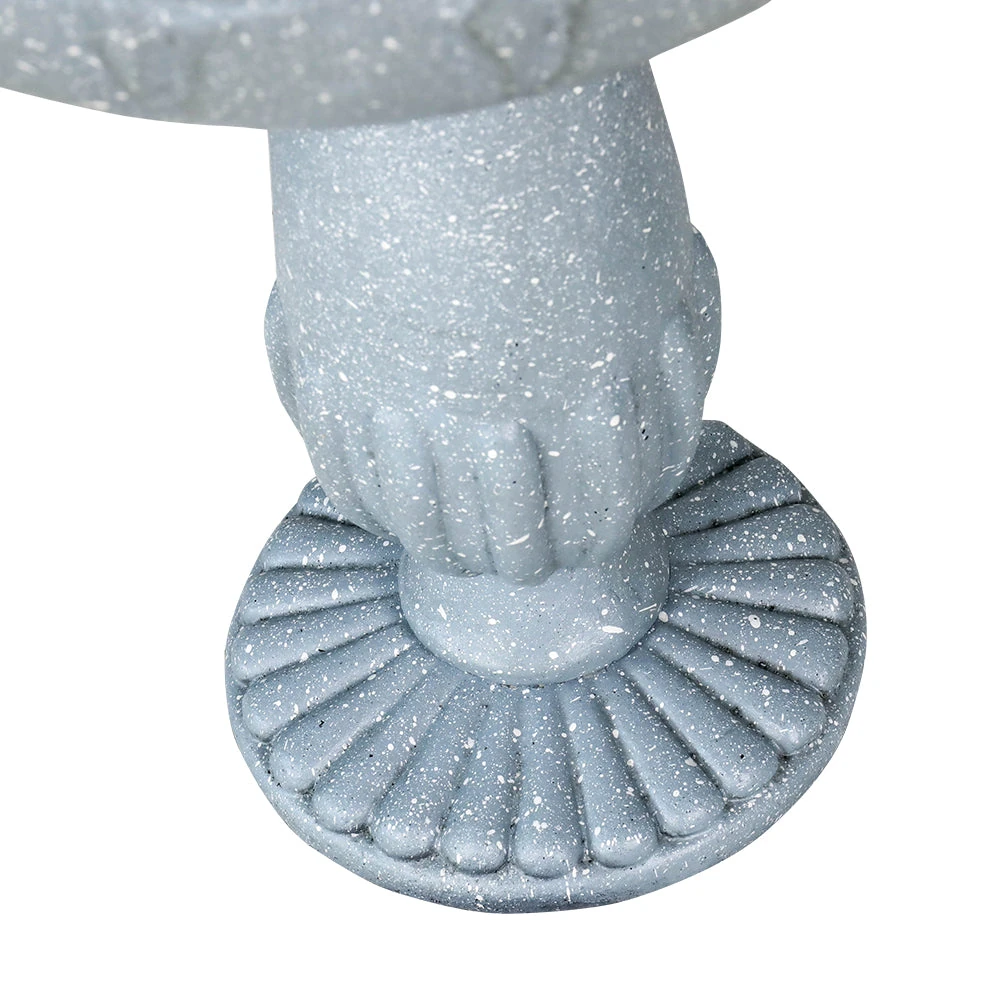
| Birdbath Fountain | $189 | 15 min | $18 | Small patios, pollinator gardens |
According to a 2025 industry analysis, resin-rock hybrids now claim 61% of online outdoor fountain sales because they ship by ground (no freight surcharges) and survive -20 °F without cracking. Natural stone still wins on prestige but demands forklift placement—adding $200-$400 to install cost.
Real-World Stories: 4 Homeowners Reveal Install Costs, Surprises & Joys

Case 1 – Phoenix, AZ: “Solar Paid for Itself in 14 Months”
Persona: Linda M., 62, retired teacher
Product: 42.5″H 5-Tiered Clay Pot LED
Total Spend: $279 fountain + $89 solar-battery kit
Surprise: “I assumed solar meant weak trickles. The pump pushes 200 gph until 10 p.m. My July electric bill dropped $31 versus the old plug-in fountain. Hummingbirds returned within two days.”
Case 2 – Denver, CO: “Weight Was the Wolf”
Persona: Chris R., 38, software engineer
Product: 47.2″H Stacked Shale LED
Total Spend: $629 + $120 crane fee (balcony install)
Surprise: “My condo deck has a 90 psf limit. I almost bought real shale—1,200 lb! The resin-composite version is 186 lb and looks identical. Snowmelt cycles: zero cracks so far.”
Case 3 – Orlando, FL: “HOA Said Yes in 24 Hours”
Persona: Jasmine T., 44, realtor
Product: 3-Tiered Cement Grey 43.3″H
Total Spend: $329 + $50 beige tint (HOA color match)
Surprise: “Our covenant requires ‘muted earth tones.’ A 15-minute call and emailed product shot got approval. Appraisal added $2,100 to home value—6× ROI.”
Case 4 – Portland, OR: “Birdbath Fountain Became the Instagram Star”
Persona: Alex & Sam K., 29 & 31, content creators
Product: 40.5″ Rocks 6-Tier
Total Spend: $279 + $0 (self-install on existing patio)
Surprise: “We added a ring light for night shoots. The cascading sound killed street noise—our Reels watch-time jumped 38%. Sponsored posts paid for the fountain in four weeks.”
Purchase Guide 2025: Which Fountain Fits Your Climate, Budget & Style
Matchmaker Matrix
- First-time buyer on a budget: 40.5″ Rocks cascade—simple, solar-ready, under $300.
- HOA stickler: 3-Tier Cement—earthy grey passes most color rules.
- Southwest xeriscape: Clay Pot LED—terra-cotta hue echoes desert tones.
- Evening entertainer: Stacked Shale—47-inch presence plus integrated lighting doubles as patio lamp.
Install & Care: Step-by-Step Pro Workflow
How to Install a Tiered Fountain in 7 Steps (No Forklift Required)
- Site Audit: Choose level ground within 5 ft of a GFCI outlet or full-sun zone for solar.
- Base Prep: Lay 2-inch paver base, tamp until imprint heel barely shows.
- Basin Placement: Center reservoir tub; check rim level side-to-side.
- Pump Prime: Attach hose to pump, set on lowest shelf; add 3 gal water before plugging in.
- Stack Tiers: Align pre-drilled holes; insert stabilizing pins (supplied).
- Flow Test: Run 10 minutes, adjust pump slider until top tier sheet is ¼-inch deep.
- Final Touch: Hide cord with mulch or river rock; add 2 oz algaecide monthly.
FAQ: Power Bills, Winterization, Mosquitoes & More
Q1. How much does a fountain raise my electric bill?
A 45 W pump running 8 hrs daily adds roughly $2.10/month at the 2025 US average of 16 ¢/kWh. Solar-battery kits drop that to zero after payback of 8–14 months depending on sun hours.
Q2. Will standing water breed mosquitoes?
Continuous circulation disrupts larvae development. Add a $12 mosquito dunk tablet monthly for extra protection; it’s safe for pets and birds.
Q3. Do I need to shut it down in winter?
In zones below 32 °F, drain and cover. Resin-composite models tolerate light frost if water is removed; cement should be stored indoors or wrapped with breathable fountain cover.
Q4. How long do pumps last?
2025 magnetic-drive pumps average 3.5 years. Smart-sensor versions stretch to 5.8 years because they throttle down before dry-run damage. Replacement cartridges cost $38 and swap in 8 minutes.
Q5. Can I add fish?
Small fountains lack bio-filtration for goldfish. Use a dedicated birdbath fountain or upgrade to a pond-style reservoir (>50 gal) with external filter.