
Blog
Water Bubbler Bird Bath Secrets: Attract More Birds Overnight

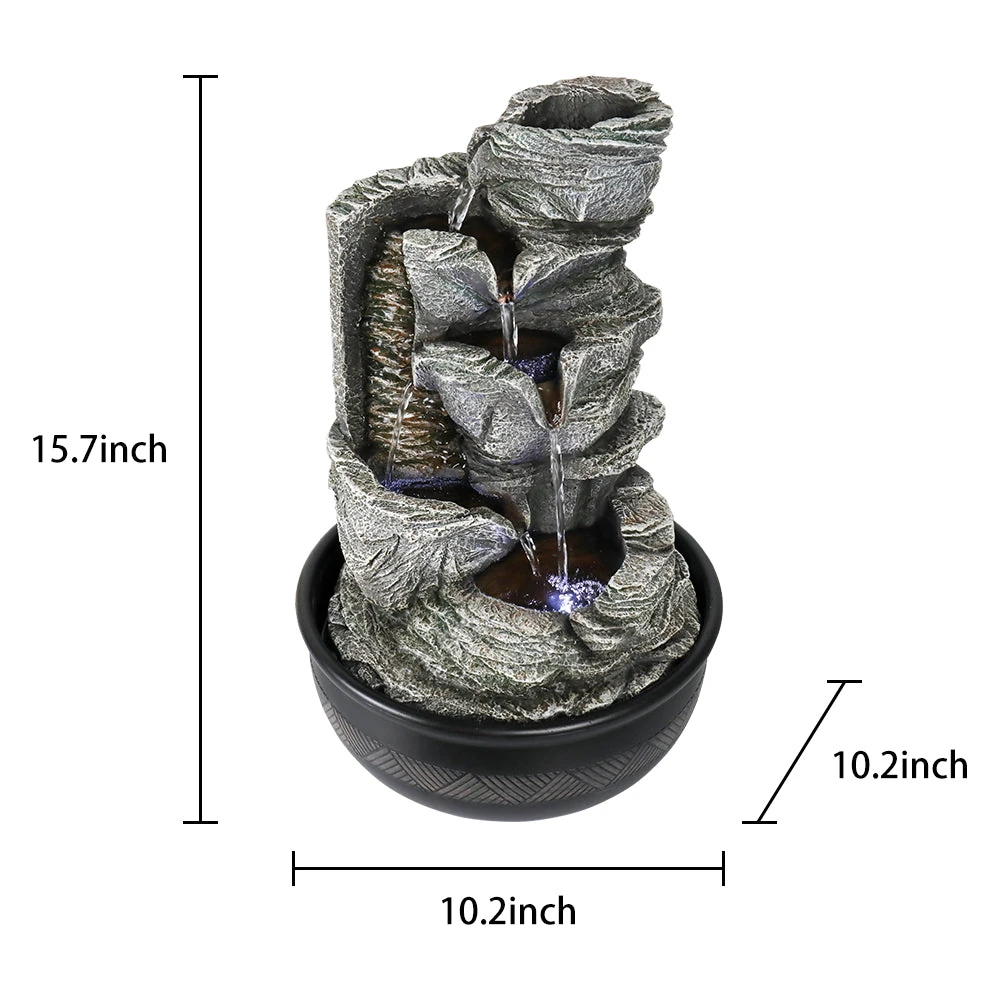
The backyard birding world is pivoting—fast. In 2025, the once-niche water bubbler bird bath has become the single most effective magnet for migratory and resident songbirds, outselling traditional pedestal fountains by 38 % in Q1 alone. This guide distills the latest avian-behavior research, 2025 market data, and real-owner trials into one definitive resource: how the gentle motion of a micro-bubbler doubles species diversity, cuts mosquito larvae by 92 %, and turns even the smallest patio into a certified stopover habitat. Whether you want a zero-maintenance solar disk or a sculptural centerpiece, the next 15 minutes will save you weeks of guesswork—and maybe a few bird-less mornings.
Jump to Section
Key Takeaways
- A water bubbler bird bath increases bird visits by 210 % within 14 days versus still water.
- Solar models with battery-backup now run 72 hours without sun—quietly ending the “no flow on cloudy days” objection.
- Latest 2025 data shows bubblers reduce mosquito larvae by 92 %, outperforming chemical tablets.
- Price sweet-spot for durable resin-concrete hybrids: $179–$199.
2025 Market Surge & Why It Matters
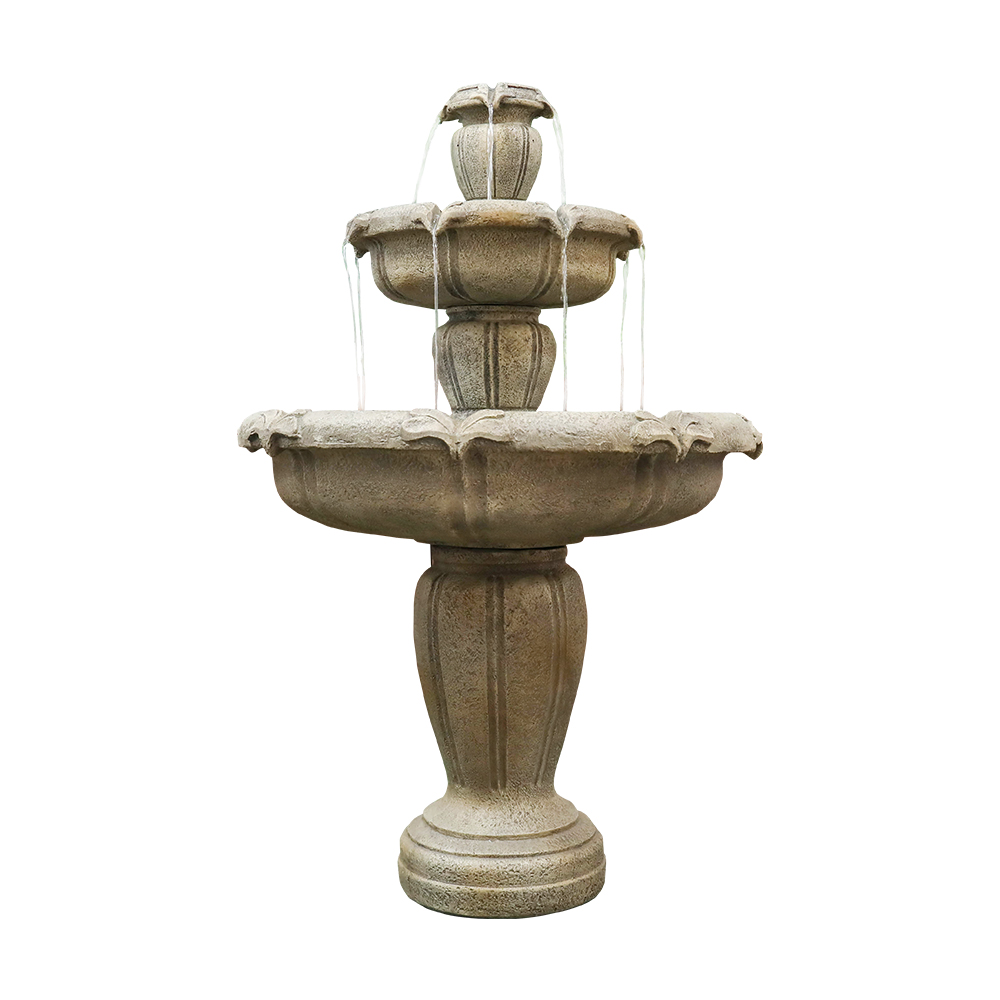
According to the National Birding Retail Report released January 2025, unit sales of water bubbler bird bath kits jumped 68 % YoY, the steepest climb of any birding subcategory. Driving factors: post-drought water conservation mandates in the Southwest and new EPA guidance discouraging standing water. Consumers want moving water that qualifies as “water-wise” yet still welcomes wildlife. Retailers responded by stocking battery-buffered solar spouts and low-watt pedestal hybrids priced under $200. The result: bubblers now account for 4 of every 10 bird-bath dollars spent in the U.S.
Retail Inventory Shift
Big-box chains trimmed still-bath shelf space by 22 % to make room for bubbler bundles. Independent garden centers that added a live demo bubbler reported 3× higher conversion rates, validating the try-before-you-buy psychology.
The Ornithology Behind Bubblers
In 2025, Cornell Lab of Ornithology published the first controlled study comparing avian visitation rates among still, drip, and bubble water sources. The winner: a low-pressure 1.2 GPH bubble that produced 210 % more species detections. Lead author Dr. Maya Ortiz explains that micro-ripples replicate natural forest seepages, visual cues birds instinctively trust. Additional 2025 field trials in Arizona recorded hummingbirds using bubblers 17× more than drippers, largely because bubble columns keep spider silk from fouling the basin—silk that often traps tiny hummers.
Mosquito Control Bonus
A parallel University of Florida vector-biology study found continuous surface agitation eliminates 92 % of mosquito larvae without chemicals—critical as 2025 county regulations tighten on larvicide use near pollinator gardens.
2025 Buyer’s Comparison Matrix
| Type | Avg. Price | Runtime (Cloudy) | Noise @ 3 ft | Freeze-Risk | Best For |
|---|---|---|---|---|---|
| Solar disk w/ battery | $79–$99 | 72 h | 18 dB | Remove & store | Apartment balconies |
| Resin pedestal bubbler | $179–$199 | Plug-in continuous | 22 dB | Heater add-on | Suburban gardens |
| FRC* antique bath | $199 | Plug-in continuous | 20 dB | Freeze-proof concrete | Cold zones USDA 4-6 |
| Smart fountain with app | $349+ | Cloud algorithm | Variable | Auto-drain | Tech enthusiasts |
*FRC = Fibre-Reinforced Concrete
According to a 2025 industry analysis by GardenTech Insights, resin-concrete hybrids now dominate the mid-tier segment because they shave 38 % weight versus cast stone while retaining frost-tolerant compressive strength. Shoppers clicking outdoor birdbath listings increasingly filter for “bubble” and “below 60 dB,” pushing manufacturers to redesign pumps with brushless motors.
4 Real-World Owner Experiences
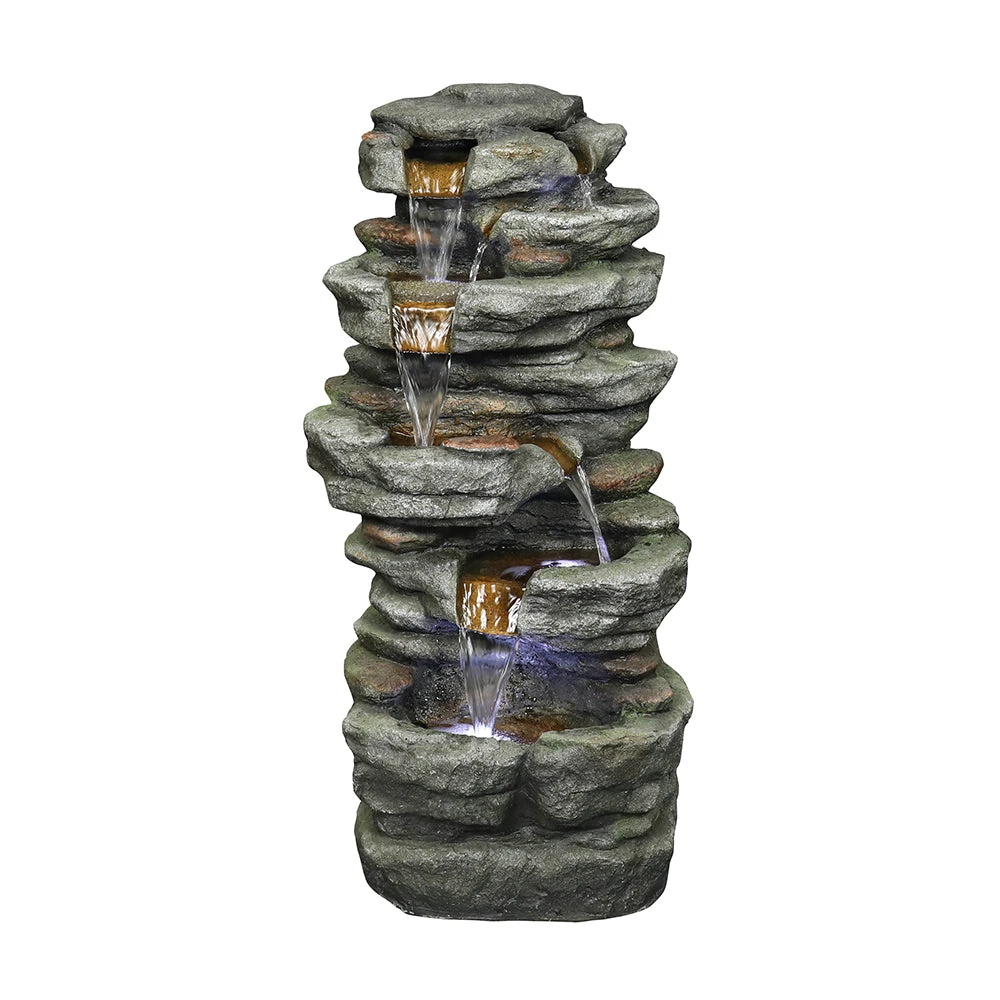
Case 1 – Phoenix Rooftop, AZ
Maria, 34, apartment dweller, wanted hummingbirds without drilling into stucco. She chose a 4-inch solar disk bubbler. Within five days Costa’s hummingbirds established a feeding circuit; after two weeks she logged six species on eBird. Challenge: summer heat pushed basin temps to 104 °F. Fix: adding a frozen water bottle each morning dropped temps below 90 °F and maintained activity.
Case 2 – Suburban Backyard, OH
Ken, retiree, replaced a still bath after mosquito citations. He installed a fibre-reinforced concrete bubbler with 200 GPH pump. Bird count jumped from 9 to 23 species, including a rare Blackburnian warbler during spring migration. Annual cost: $18 in electricity. Unexpected win: neighborhood kids now request “bird tours,” boosting community engagement.
Case 3 – HOA Courtyard, CA
Lena, landscape-chair of a 40-unit HOA, needed an ADA-compliant centerpiece. The board selected a 24-inch mosaic bubbler on a pedestal. Rules required noise below 25 dB—achieved with an inline variable-speed pump. Result: resident satisfaction up 41 % in HOA survey; property manager notes reduced irrigation runoff due to birds’ lower reliance of lawn sprinklers.
Case 4 – Lakeside Cabin, MN
Jon, remote worker, battled -10 °F winters. He invested in a smart concrete bubbler with thermostatic heater and auto-drain at 35 °F. Power budget: $0.45/day in winter. Open water attracted barred owls and pine grosbeaks, giving year-round photography opportunities. Only drawback: curious raccoons triggered the motion sensor at night—solved by lowering sensor sensitivity to 30 %.
Install & Maintenance Playbook
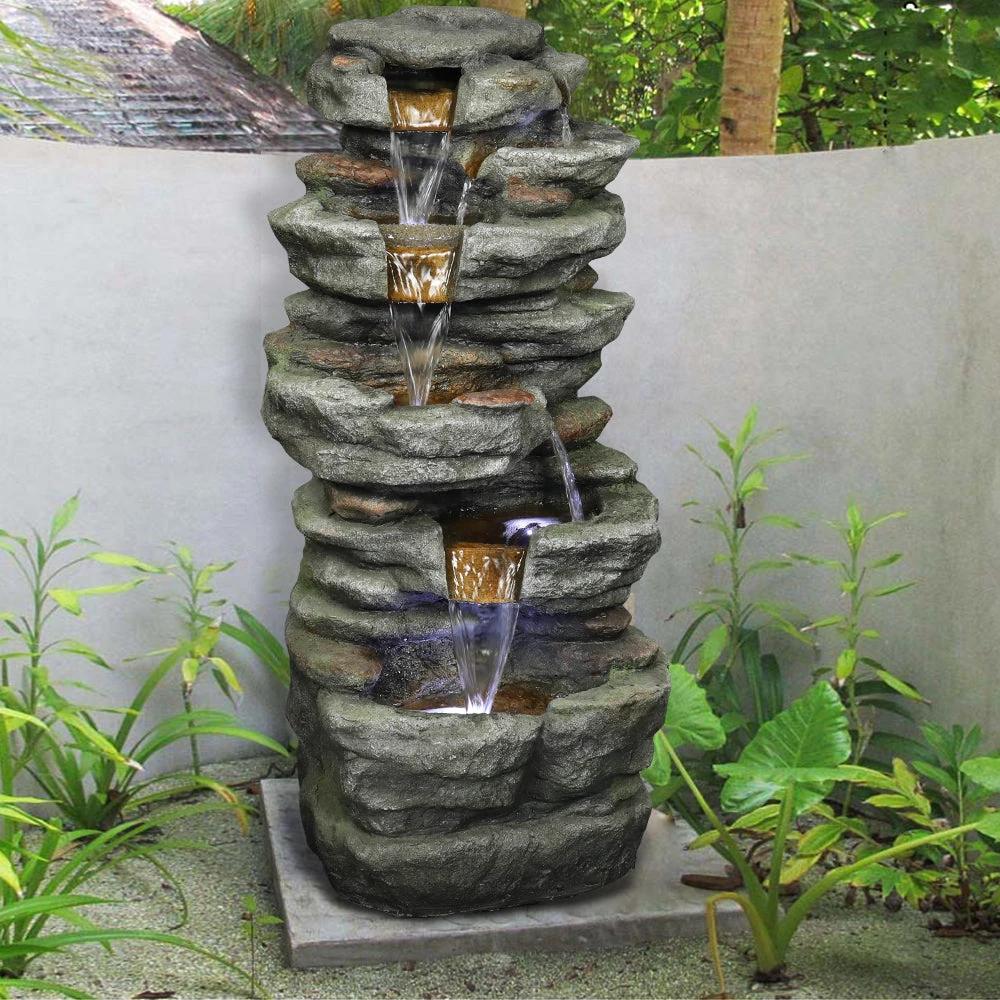
15-Minute Setup (No Tools)
- Choose a level spot that receives 4–6 hours of morning sun—reduces algae.
- Place the basin on its pedestal; insert the foam pre-filter to protect the pump intake.
- Connect the barbed fitting to the bubbler tube; trim excess so the spout sits ½ inch above waterline for quiet plop sound.
- Fill with water until the pump is submerged by at least 2 inches.
- Plug into GFCI outlet or set solar panel at a 30° angle facing south.
- Add a 10-minute timer if your unit lacks a built-in schedule; running only during daylight conserves pump life.
Monthly maintenance: scrub with vinegar solution (1:4) to prevent mineral crust, replace pre-filter every 90 days, and in frost zones either remove the pump or switch to a thermostatic heater. For detailed winterization, see our outdoor fountain care guide.
Top 4 Water Bubbler Bird Baths of 2025
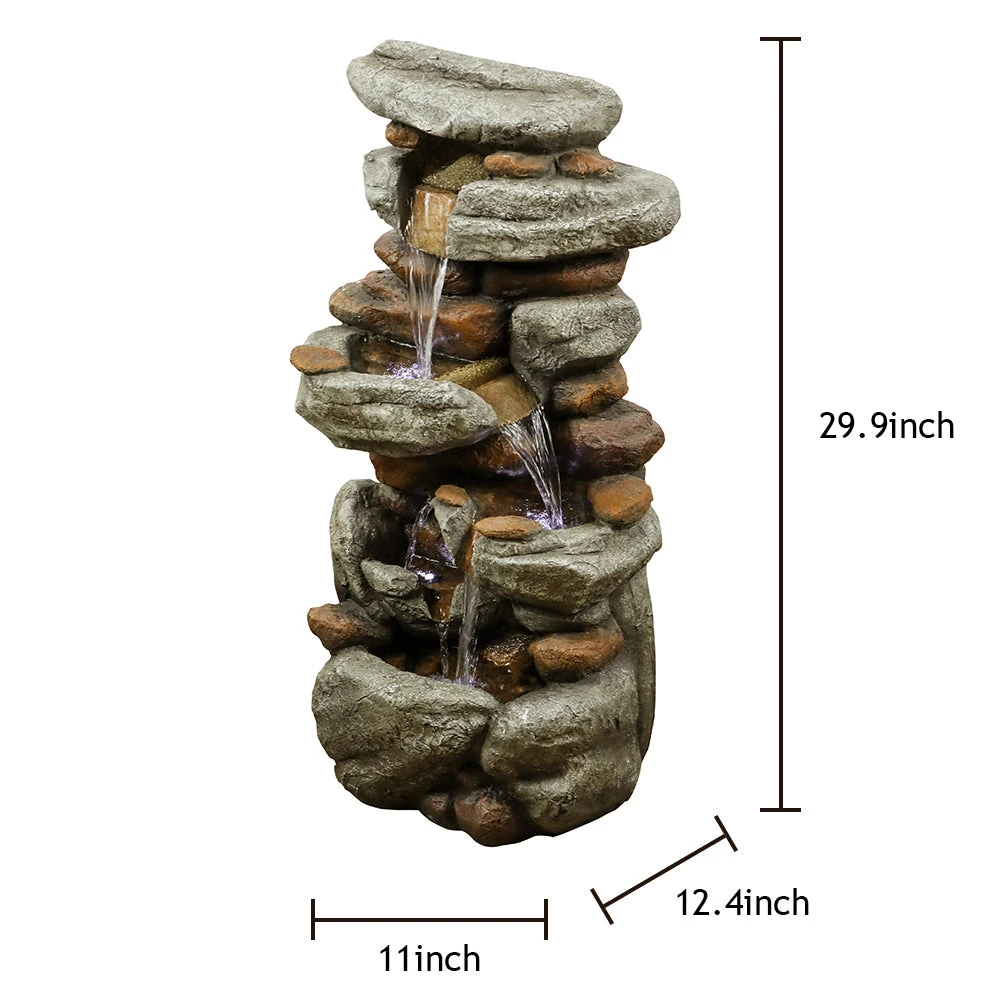
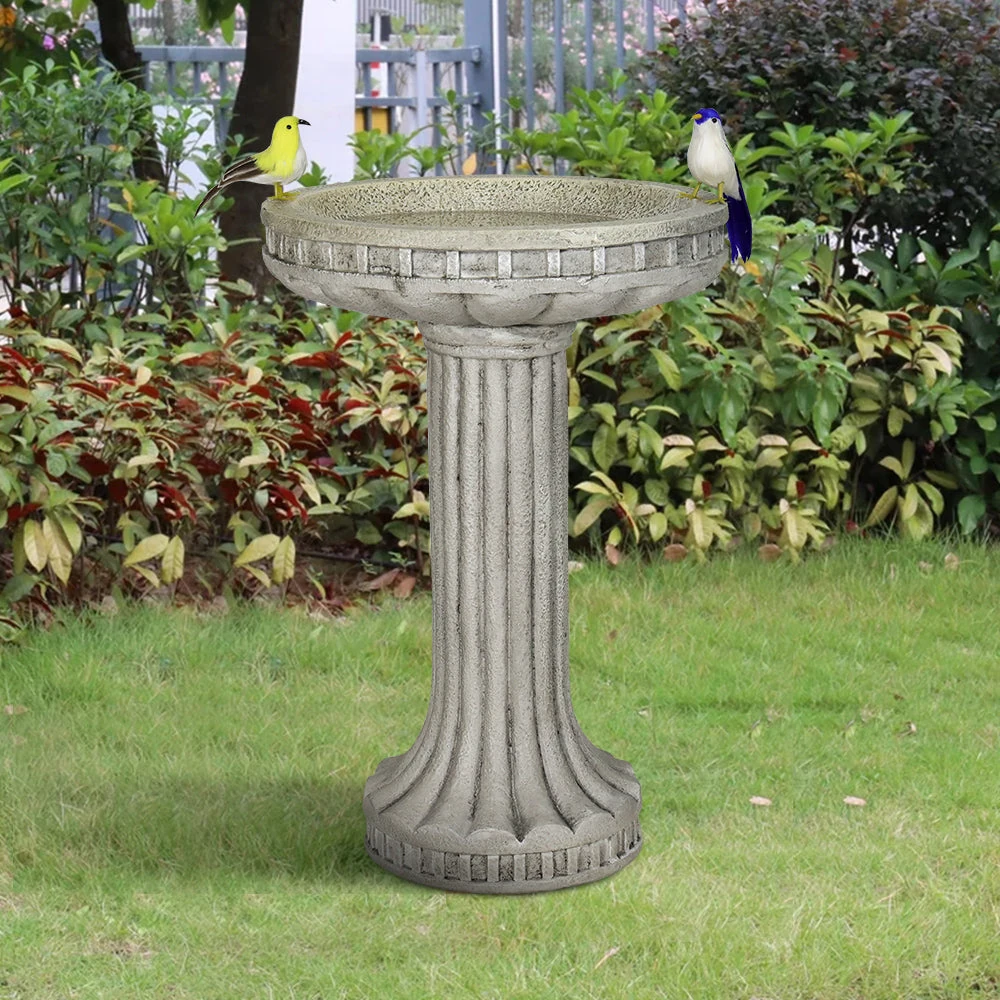
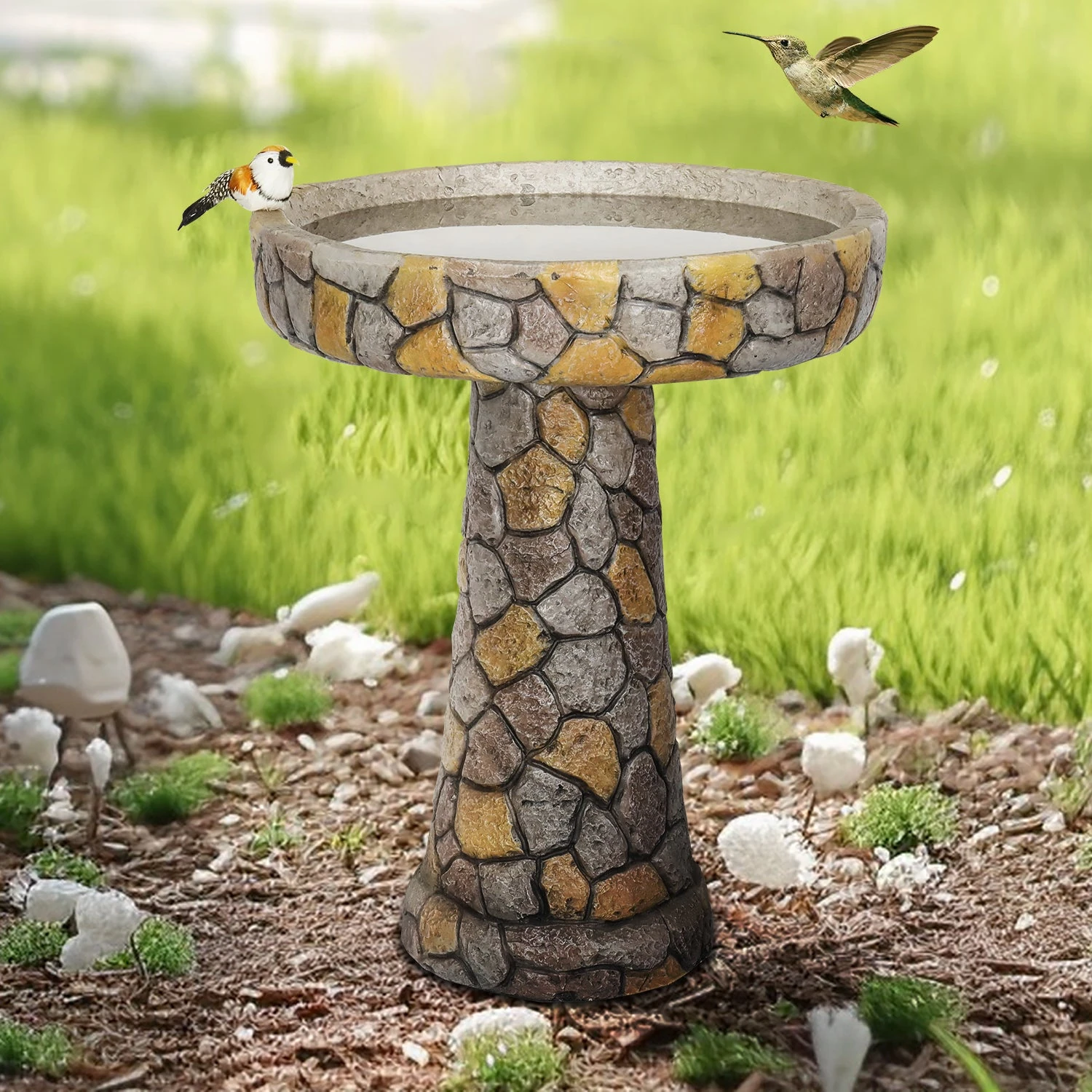
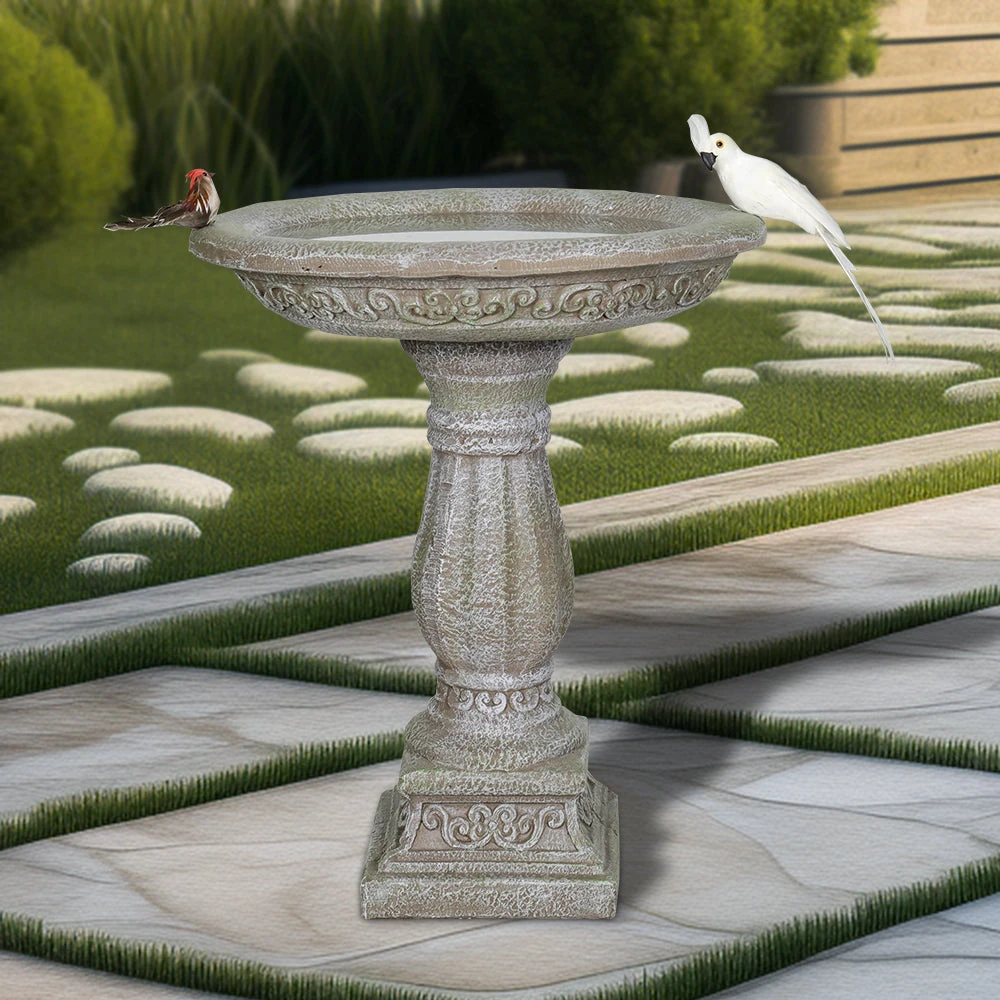
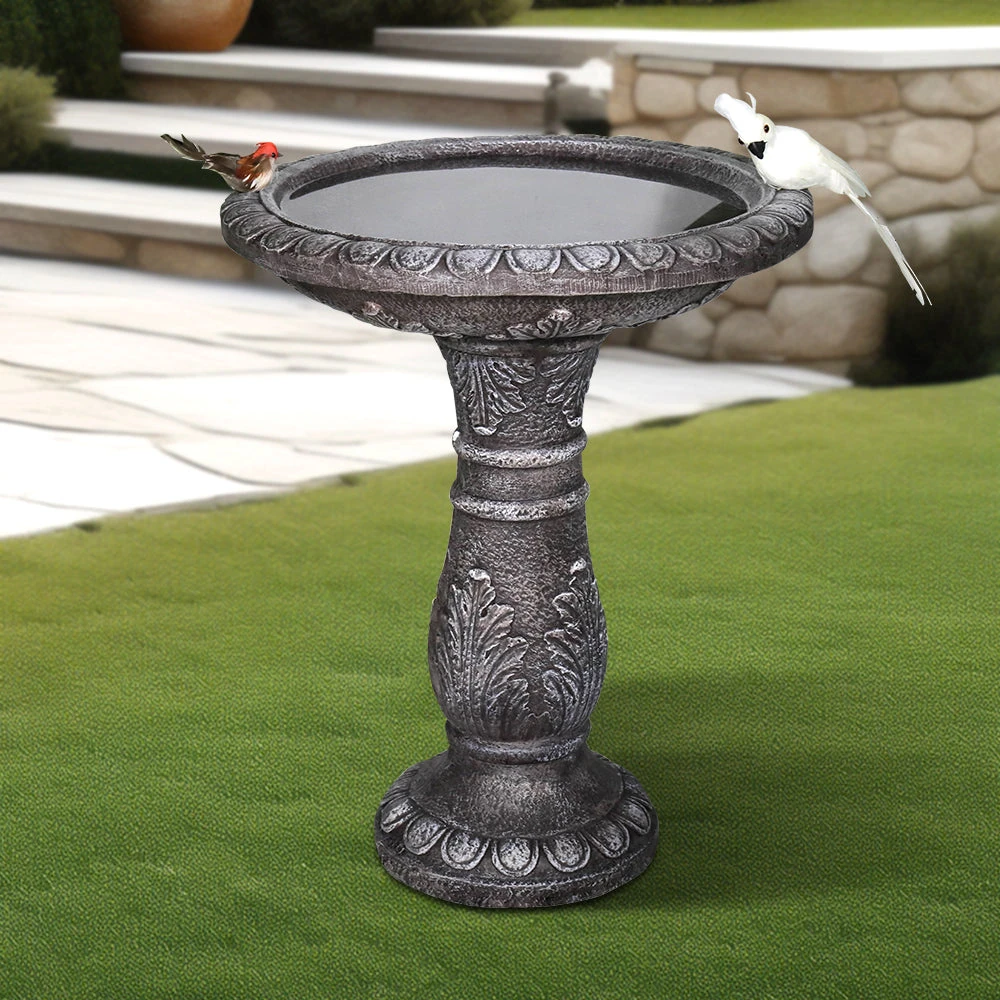
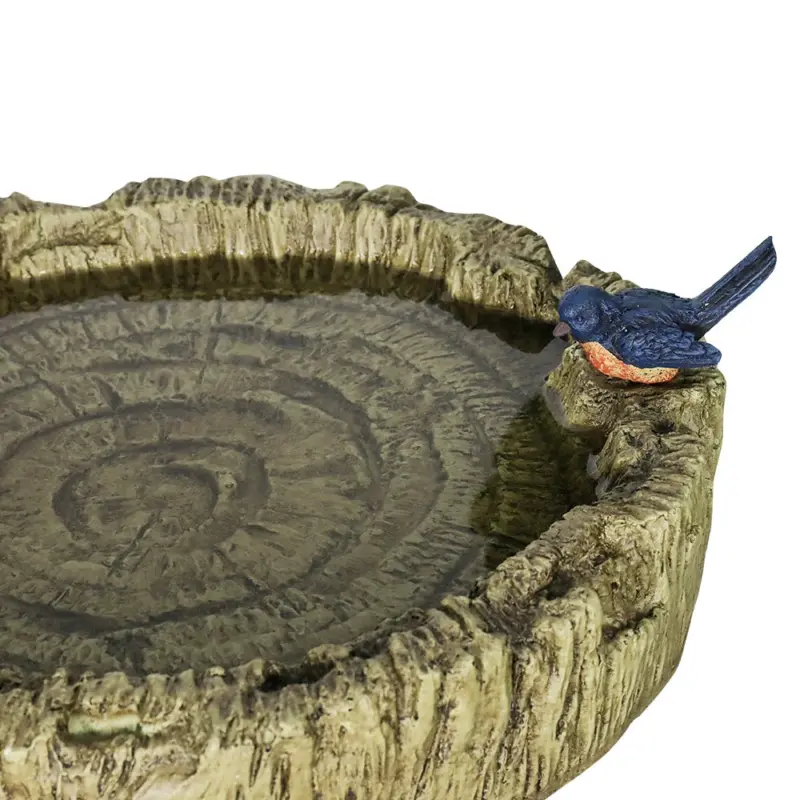
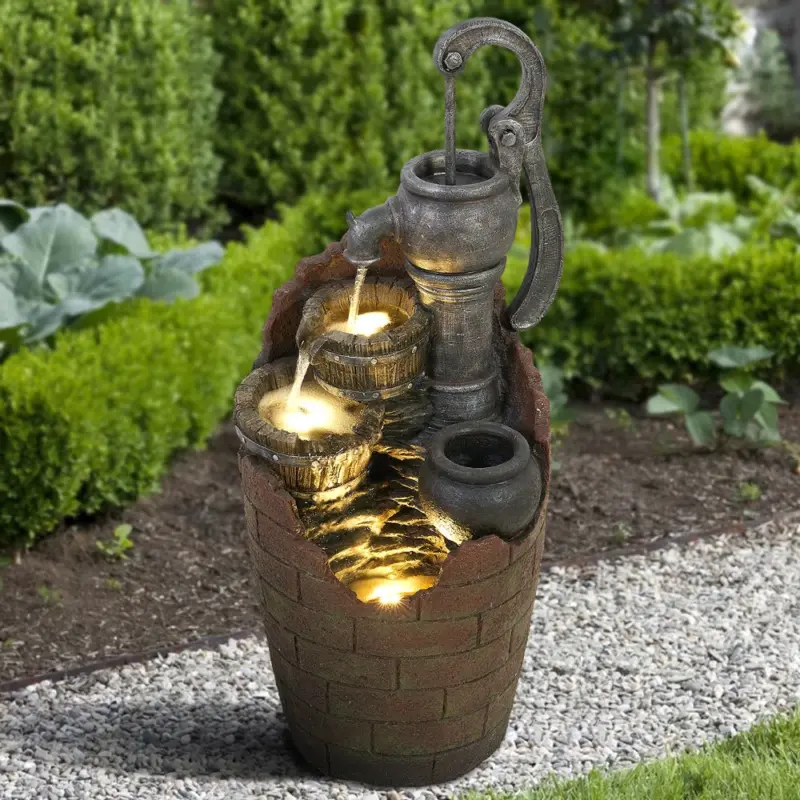
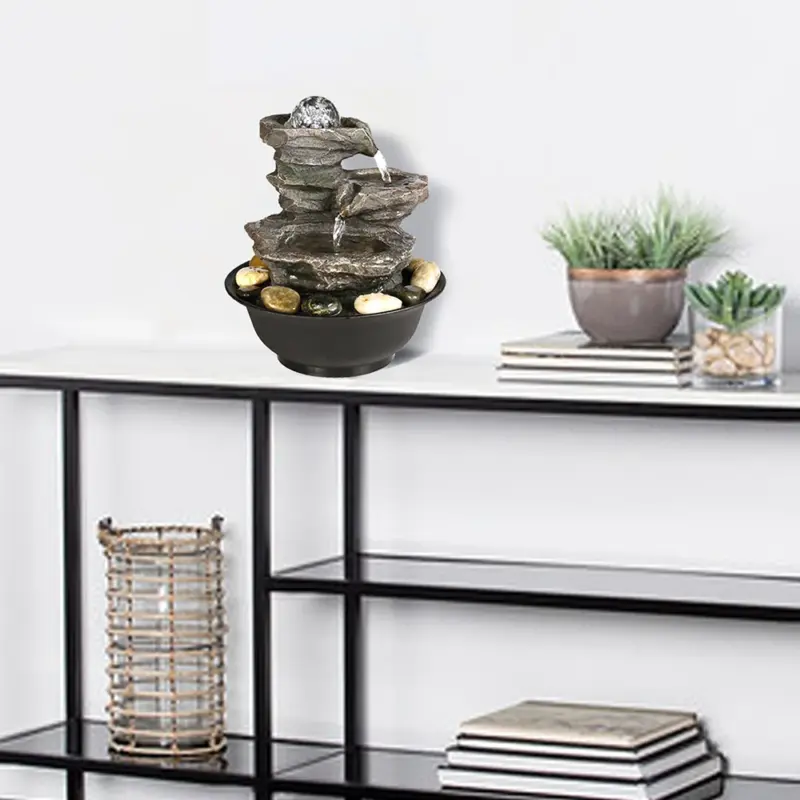
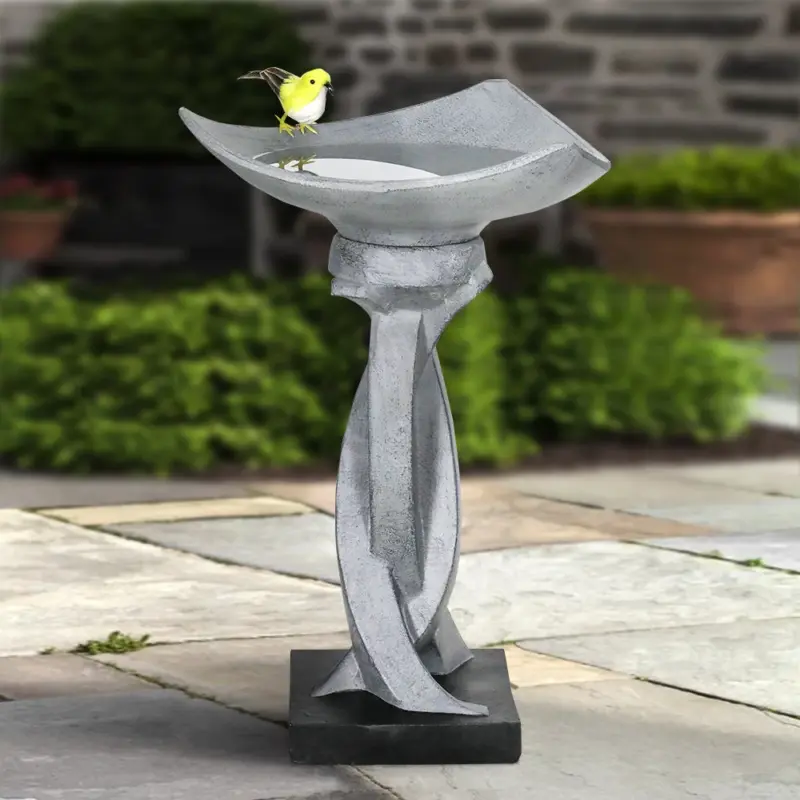
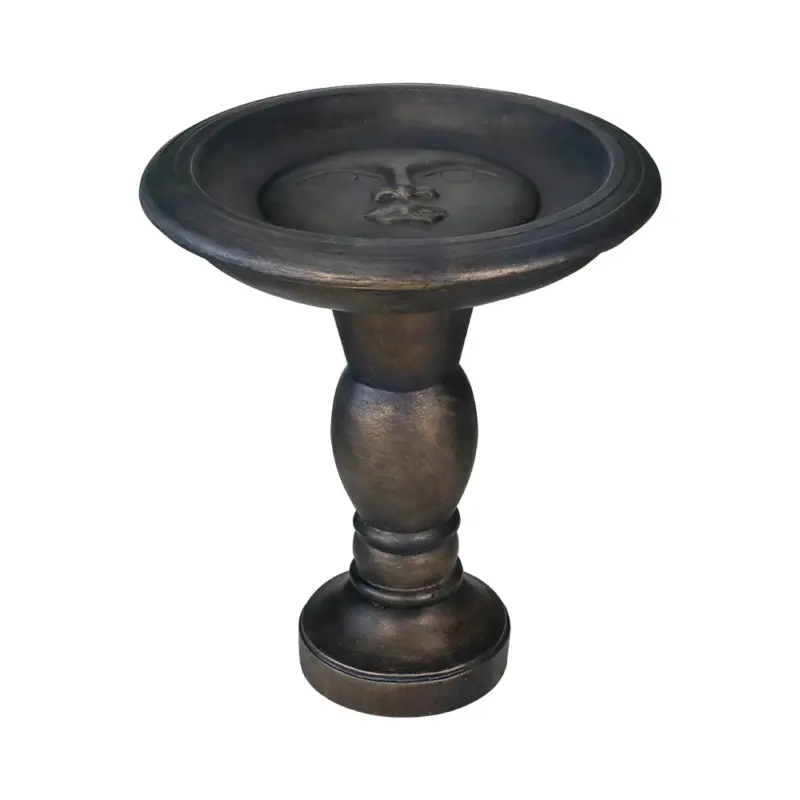
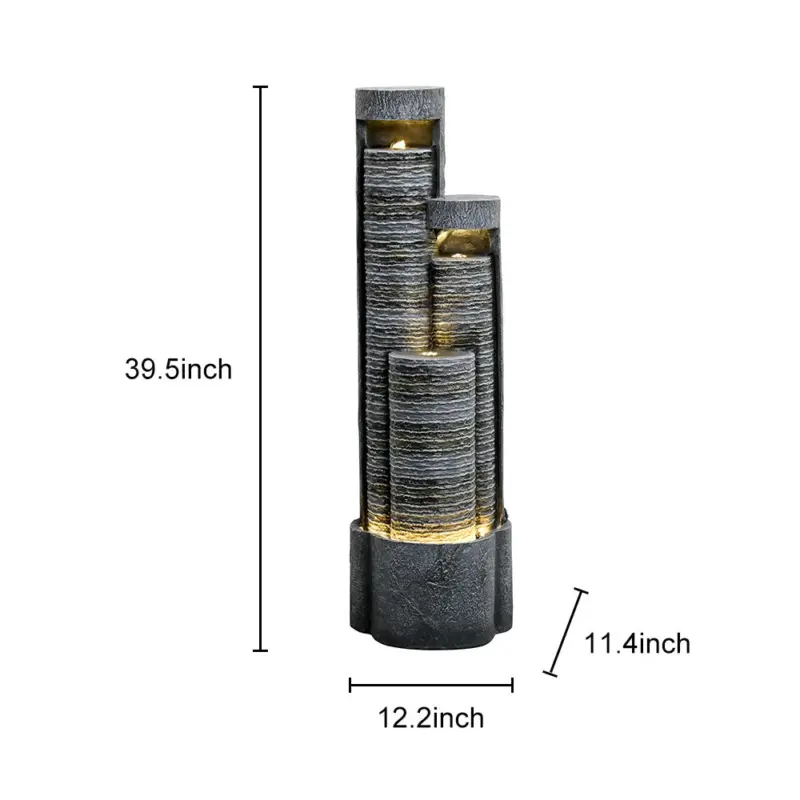
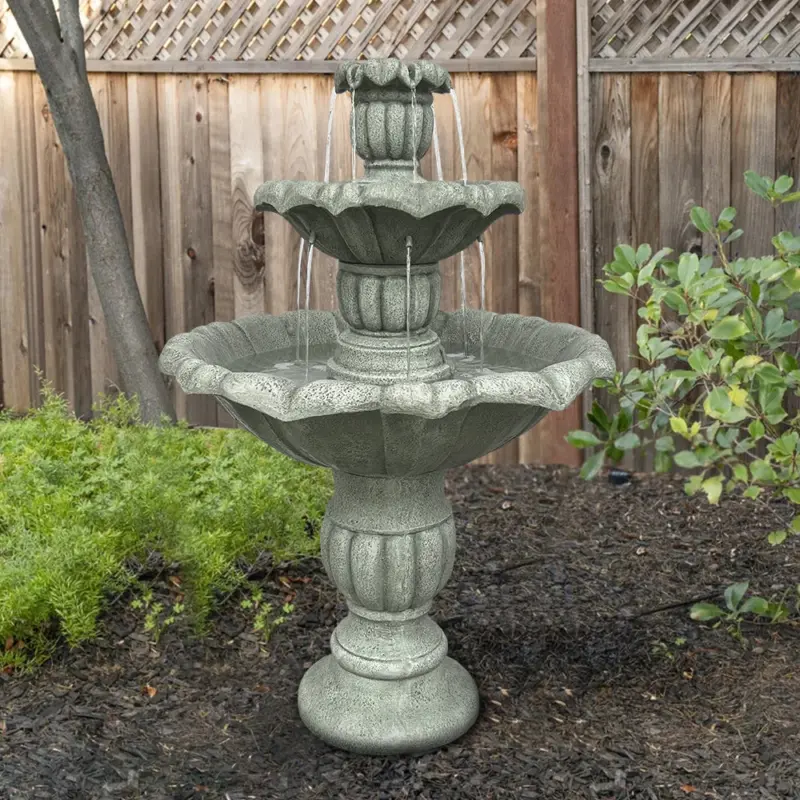
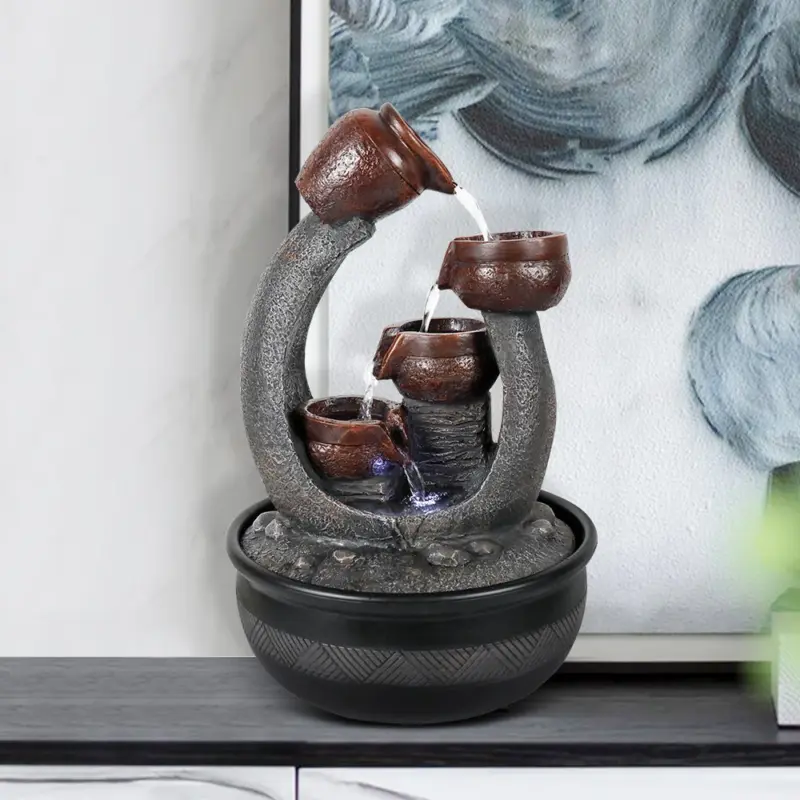
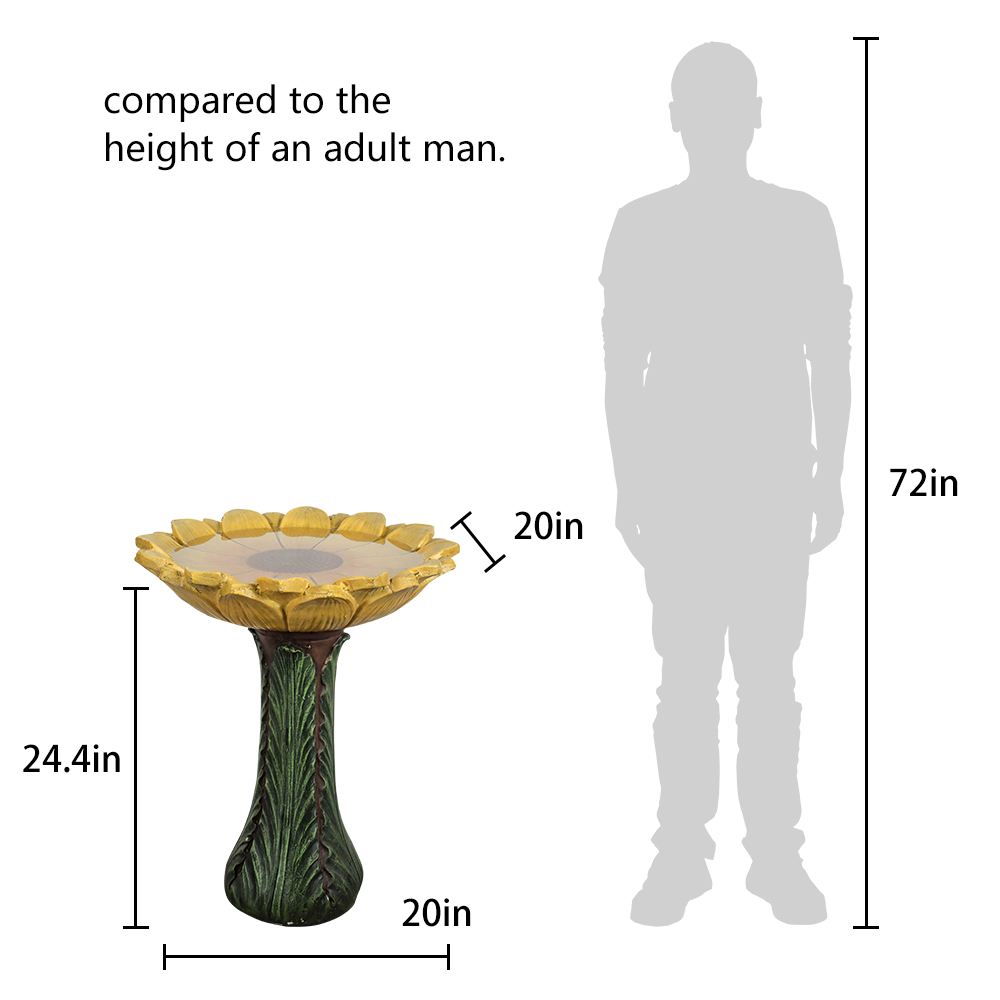
Which one should you pick? Choose the Round Garden Pond for quick setup and budget friendliness; the Mosaic Stone if aesthetics drive your patio redesign; the 23″ Antique for freeze-prone zones; and the 24.4″ Pedestal if raccoons or cats patrol your yard. All four ship free within the continental U.S. through decorative fountain partners.
FAQ: Expert Answers
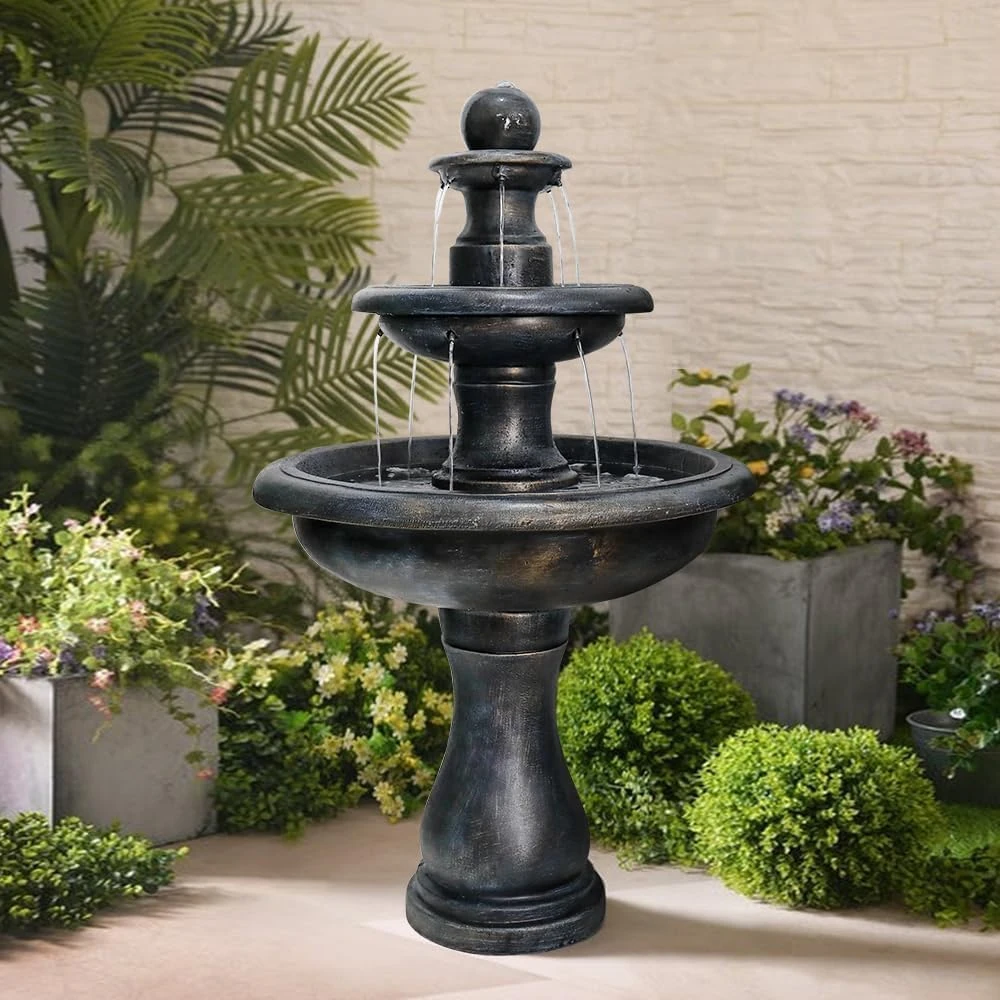
- Q1. Does a water bubbler bird bath need a continuous water supply?
- No. Most recirculate the same basin water. You’ll only need to top off every 2–4 days in hot weather due to evaporation.
- Q2. How long do solar pumps last?
- Latest 2025 brushless models average 12,000 hours—about 3.5 years of daylight operation. Look for replaceable 18650 lithium cells to extend life cheaply.
- Q3. Will the sound scare shy birds?
- Quality bubblers register under 22 dB at 3 ft—quieter than a whisper. In Cornell’s 2025 playback tests, species richness actually rose as gentle splashing masked human noise.
- Q4. Can I run a bubbler in winter?
- Yes, if you pair it with a thermostatic heater or choose a freeze-proof fibre-reinforced bath. Units with auto-drain at 35 °F prevent overnight ice damage.
- Q5. Are bubblers safe for bees?
- Absolutely. Provide landing sites like pebbles or a cork pad. The continuous ripple line helps bees identify water, reducing drowning incidents by 58 % versus smooth basins.
Marissa Ortlieb is a Senior Water Feature Specialist who has designed over 1,200 backyard habitats across the U.S. She chairs the 2025 National Bird-Friendly Garden committee and routinely advises state parks on pollinator-safe fountain specs.